
PRODUCT SEARCH
Find high performance, low impact materials for your building project.
NatureWall IWI: A PAS 2035-Compatible Wood Fibre IWI system

Easy installation with service battens

Breathable and Moisture Safe
Ideal for solid brick/stone or cavity walls

Fire tested: B-s1,d0

WUFI modelled to avoid moisture risk

Includes airtightness layer
What makes up the NatureWall IWI system?
The NatureWall internal wall insulation system uses natural wood fibre insulation to provide unrivalled insulation, moisture control and heat retention. Wood fibre insulation, well known for its breathable properties, is ideal for use on solid-walled stone and brick properties as well as more modern brick or block cavity walls.
To provide very high levels of airtightness and to improve suitability over a much greater range of properties, we have included an airtightness membrane within the system. This gives us a range of membranes to choose from to ensure the correct functioning of the system in every individual project.
A battened service zone is included with the system to allow services to run through the walls without breaking through the airtightness layer. Even in commercial spaces, it is easy to get high levels of insulation without impacting practicality.
In collaboration with Red CoOp in Manchester, the design has been refined and tested for suitability and practicality on historic and modern buildings alike.
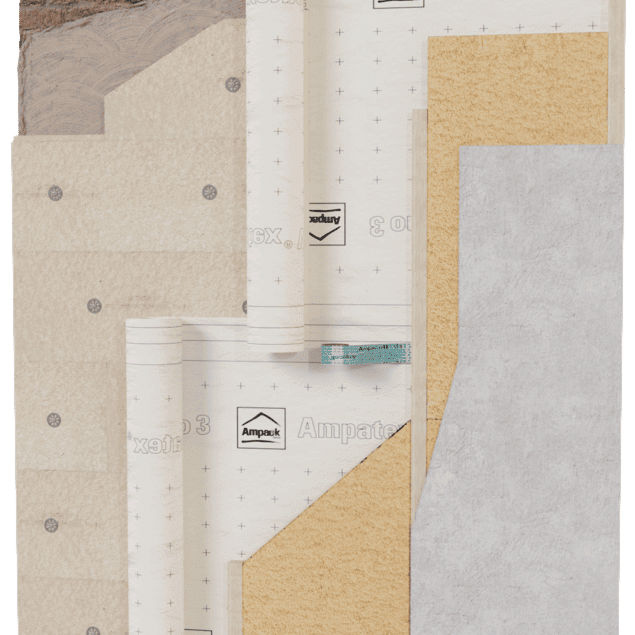
NatureWall IWI can be finished with either standard plasterboard or Fermacell, depending on the level of robustness required. Both are highly breathable and low embodied energy products, complimenting the low carbon nature of the system. With this simplicity, a wide range of tradespeople can use the system with their existing skills.
Naturewall IWI Construction Details

PAS 2035 Compliance & BDA Agrément Certification
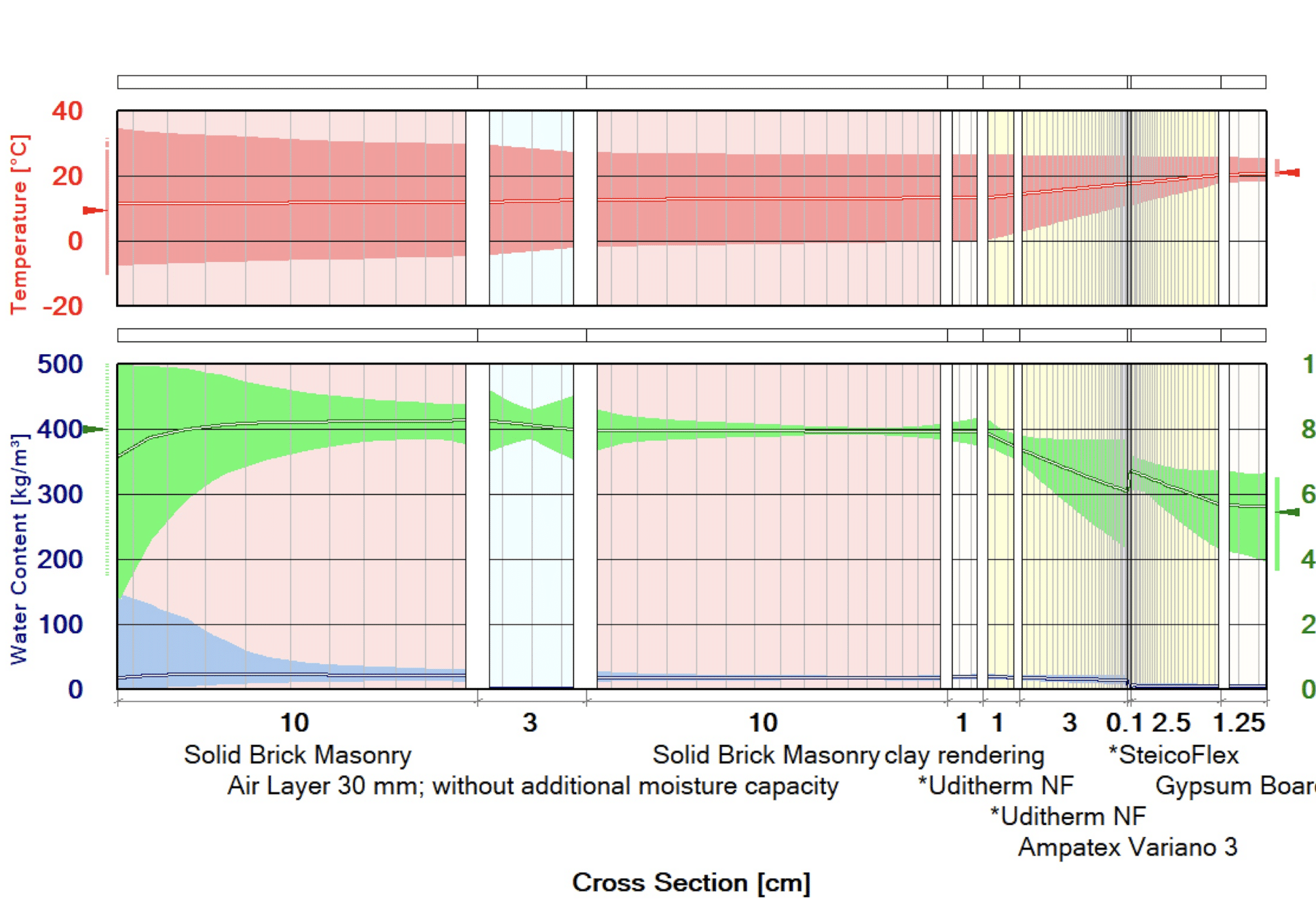
Using the latest Heat and Moisture Modelling software (WUFI), we ensure that the correct amount of insulation is used on each project. This avoids issues such as building damage, moisture issues and mould growth that arise from a 'one-size-fits-all' approach. The NatureWall IWI Suitability Confirmation (NSC) document lists all of the materials required for each project so installers know what is necessary.
Naturewall IWI has been fire tested by Warrington Fire and confirmed as having a rating of B-s1,d0, well within what is required by the UK Building Regulations. The system also has a third-party KIWA BDA Agrément certificate (PAS 2030/2035) to confirm its suitability and its compatibility with PAS 2030/PAS 2035.
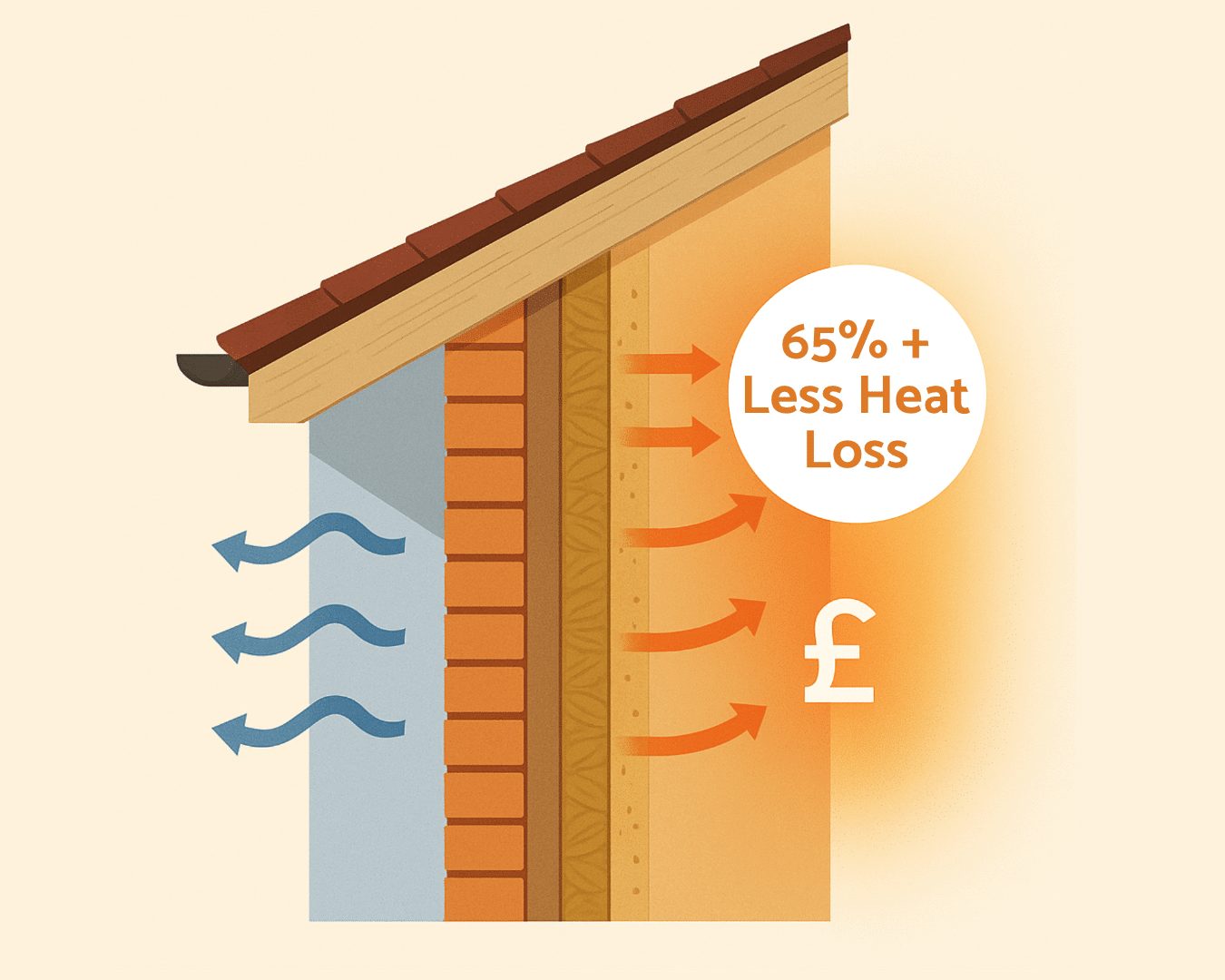
Energy Savings & Payback Period
Even the thinnest layers of the NatureWall IWI system will reduce conductive heat loss through uninsulated walls by more than 65%, dramatically improving comfort and indoor air quality, with the thicker layers reducing heat loss by up to 85% or more.
Exactly how much this will reduce your energy bills by depends on how you heat your building but the typical payback period would be between 5 and 10 years, depending on whether you use gas or electricity to supply your heat.
Because of the way the system is detailed around openings and penetrations, it also makes your walls much more airtight, again reducing your heat loss and saving on energy costs.
Suitable Wall Types & U-values for NatureWall IWI
The NatureWall IWI system is suitable across a range of solid masonry types and unfilled cavity walls. Solid natural stone and brick walls, with or without external renders can often be insulated, even if the external renders are cement-based and painted with masonry paint.
However, to ensure you have the correct specification for your project, please fill out the Site Assessment Checklist and email it to us. This allows us to create the perfect specification.
In terms of U-values, on pre 1945 buildings, the building regulations actually state that you need to achieve a U-value of less than 0.7 W/m2K even though a figure of 0.3 W/m2K is often mentioned. On a typical solid brick wall, the thermal performance can be seen in the table to the right:-
| Wood fibre board thickness | Batten depth/SteicoFlex insulation depth | U-value achieved |
| 40mm | 25mm/25mm | 0.46 W/m2K |
| 40mm | 45mm/40mm | 0.39 W/m2K |
| 60mm | 25mm/25mm | 0.38 W/m2K |
| 60mm | 45mm/40mm | 0.34 W/m2K |
| 60mm | 50mm/50mm | 0.31 W/m2K |
| 60mm | 63mm/60mm | 0.29 W/m2K |
Designing and Installing NatureWall IWI under PAS 2035
To ensure designers and installers know exactly how to assess the project, design the system in and install it correctly, we have created a host of resources available right now for those at any stage of the Naturewall process.
We offer a dedicated NatureWall Installation Course through our free, online training platform, Fibres Academy. The course walks participants through key procedures and tests their understanding to make sure they understand what is required. Having an online training resource allows access to all the necessary design and installation guidance, whether at home or on site, enabling users to learn and up-skill whenever and from wherever it suits them.
Furthermore we have downloadable Naturewall PDF documents, a Naturewall help guide in our learning lab and other useful resources. You can find all of them below.

As part of our Fibres Academy Naturewall IWI course we have a full animated installation video taking you through each step of the installation process, from bare brick wall to plasterboard finish. You can watch the video now by clicking he thumbnail to the left or head to the Fibres Academy and sign up to the course today.
Naturewall IWI Resources
NatureWall IWI FAQs
What is the difference between NatureWall IWI and other wood fibre internal wall insulation systems?
The system incorporates different membranes which not only make it very airtight, but allow it to be used in many locations around the country and at different thicknesses than a solid wood fibre system would offer.
NatureWall incorporates a service zone so that services can be installed without having to cut through insulation, maintaining high levels of airtightness.
Rather than apply a lime plaster to the surface of wood fibre boards, the system is finished with standard plasterboard and gypsum plaster, both of which are very breathable. This allows a wide range of contractors to install the system and avoids the requirement for specialist trades.
You can see more information in our guide on What is Internal Wall Insulation?
Can NatureWall IWI be used on stone or brick walls with cement renders or plasters?
Assuming the plasters or renders are in good order and not cracked or delaminating then, absolutely!
There is a misconception that having cement renders with masonry paint externally means the walls cannot be internally insulated. In reality, the external render is very often helpful at keeping weather out of brick or stone.
Is NatureWall IWI PAS 2035 compliant?
Yes, it is suitable for IWI in all PAS 2030 and PAS 2035 projects.
NatureWall wood fibre internal wall insulation has a KIWA BDA Agrément certificate and is approved by QualityMark and The Installation Assurance Authority, which enables approved installers to obtain a 25 year warranty for the system and the Insurance Backed Guarantee (IBG).
What typical U-values can be achieved with NatureWall IWI?
The minimum U-value is project specific and dependent on the material, thickness and orientation of the wall.
In very wet locations with bare brick or stone in a westerly direction, it may only be able to get down to U-values of 0.50 W/m2K. However, where there is an external render and the location is drier, the system can get well below 0.30 W/m2K.
Why does NatureWall IWI need modelling before installation when others systems don't?
To support the Retrofit Designer, hygrothermal modelling software is used on each project to reduce the risk of moisture accumulation, mould or timber decay.
NatureWall has anything up to 18 different thickness and membrane combinations to ensure that a suitable specification can be found, but on occasions it is still not suitable for some projects.
A one-size-fits-all solution does not work in reality, for any insulation type or system.
