
PRODUCT SEARCH
Find high performance, low impact materials for your building project.
Building and Installation
Installation guidance, technical details and practical resources for contractors and site teams. Everything you need to build with confidence and get the work right first time.
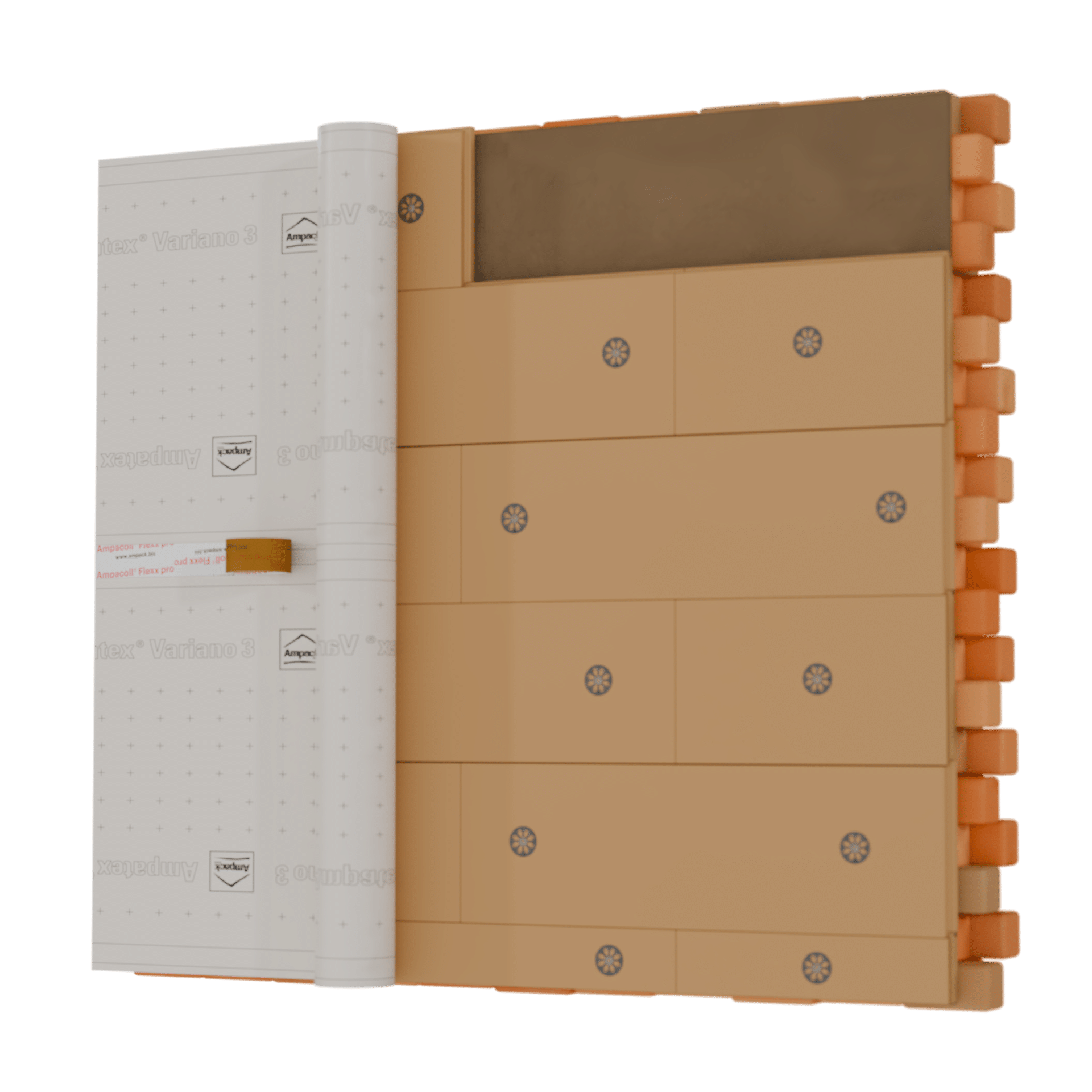
Start here.
Not sure what to dive into first? We recommend starting with these...
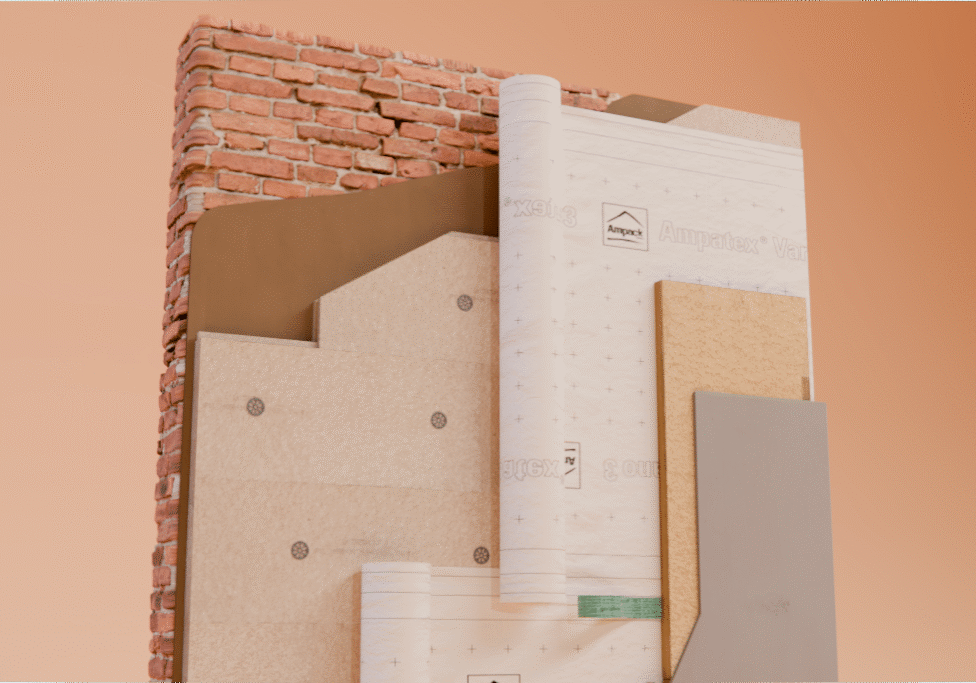
NatureWall Installation Guide
Step-by-step installation guide for the plasterboard-finished NatureWall system, with 3D models at each stage.
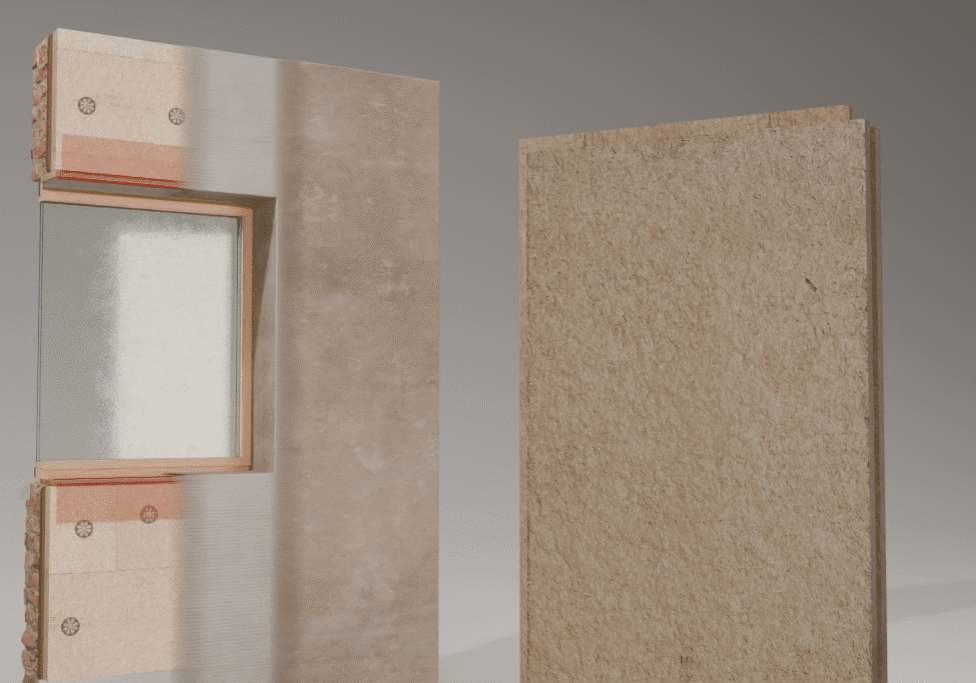
UdiTHERM Installation Guide
Step-by-step installation guide for direct lime-plastered wood fibre IWI on masonry, with 3D models at each stage.
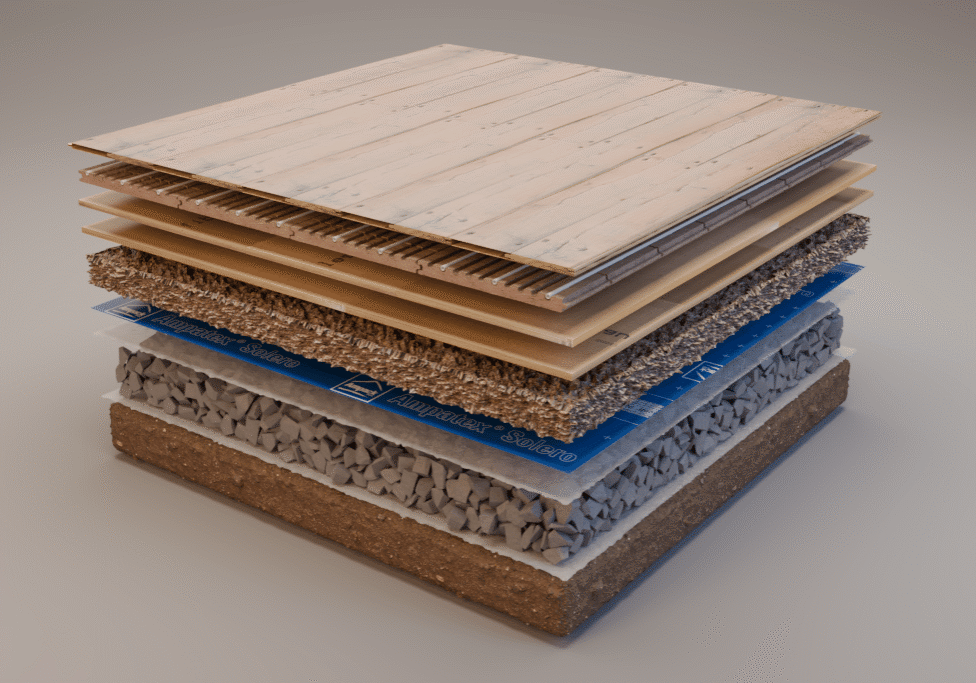
LithoGlas Installation Guide
Step-by-step installation guide for a solid insulated ground floor with underfloor heating, with 3D models at each stage.
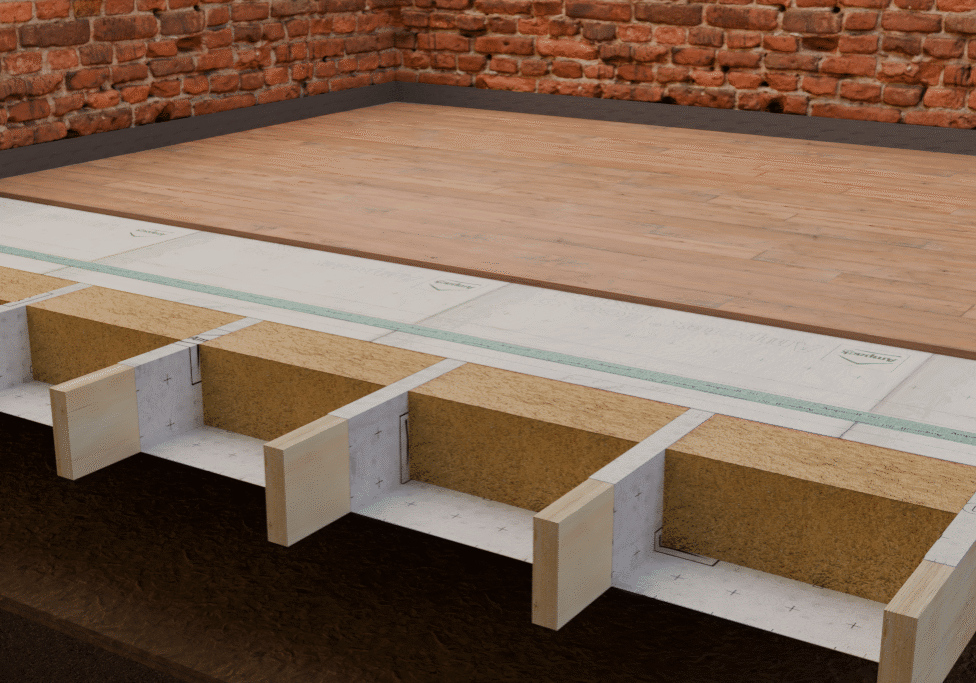
Suspended Floor Installation Guide
Step-by-step installation guide for wood fibre insulation in a suspended timber floor, with 3D models at each stage.
Explore all resources under building and installation...
Industry news

https://www.youtube.com/watch?v=A2JILSXnnuo
In this video we look at what happens to internal wall insulation when a property floods. The real problem isn't the water itself, it's what the water brings in with it, and that changes what has to happen to the insulation afterwards. Find out in this episode of 'Can I Just Ask?'.
Industry news

https://youtu.be/lCclTxAS3ko
Flat roofs are one of the trickiest roof types to get right, and the covering you choose sits at the heart of whether they perform safely over time. In this episode, Chris and Andy look at what roof coverings work best with unventilated flat roofs, covering everything from SD values and membrane types to why the colour of your roof covering has a direct impact on moisture drying during the summer months. If you're specifying a flat roof build-up with wood fibre insulation, this is an essential watch before you commit to a membrane.
Industry news

https://youtu.be/ZblFjoIQG4E
In this episode, Chris sits down with Marion for her first appearance on Can I Just Ask, talking about PAS2035, a subject that is well within her wheelhouse as a retrofit specialist. Marion explains that PAS2035 is a framework designed to make sure retrofit projects are delivered properly, from initial assessment all the way through to post-occupancy evaluation, with the right people involved at every stage. She walks through the key roles (retrofit coordinators, retrofit designers and installers working under the companion standard PAS2030) and clarifies that the scheme only applies to government-funded projects like ECO or Warm Homes Grant. It is a clear, jargon-light breakdown of a framework that affects a huge amount of retrofit activity in the UK but rarely gets explained in plain English.
Industry news

https://youtu.be/IX_-9xSPytU
Internal wall insulation is compatible with a wide range of finishes — standard trade emulsion paints work well provided they are vapour permeable (vinyl paints should be avoided), and both plasterboard and direct clay or lime plaster finishes are options depending on the system. Tiling is limited to small splash-back areas on direct-plastered systems, but NatureWall handles wet rooms fully by substituting tile backer board and omitting the flexible insulation behind wet zones to prevent water reaching the build-up. Timber cladding and ply panelling are also achievable with NatureWall, where the batten structure provides straightforward fixing without any compromise to the insulation layer behind.
Industry news

https://youtu.be/JyJ5ik1SraQ
Fixing into internal wall insulation is worth planning before installation rather than after, with the goal of minimising penetrations through the insulated layer wherever possible. For light loads, a short wood screw through the finish is sufficient; for mid-range weights up to around 5kg, spiral anchor fixings screw into the wood fibre layer and disperse the load without reaching the masonry; for heavy items like kitchen units, Fischer Thermax fixings pass all the way through the insulation with a thermally broken head that anchors into the masonry behind. Where a batten-based system like NatureWall is used, the question largely disappears — battens are fixed directly through the system and items screw straight into them as they would on any conventional wall.
Industry news

https://youtu.be/1End9OIAUmY
Solid floor retrofit here is built around two principles: eliminating ground moisture risk without a conventional DPM, and creating a fully deconstructable floor that avoids the carbon cost of wet screed construction. Recycled foam glass is compacted onto the subsoil as a capillary-break insulation layer, followed by a vapour control membrane, a mineralised wood chip levelling layer, two layers of wood fibre board, and Lithotherm — an interlocking screed-replacement tile that integrates underfloor heating pipes and takes a floating timber floor above. The whole build-up is dry, reusable, and free of the prolonged moisture burden that a conventional screed imposes on the surrounding building fabric.
Industry news

https://youtu.be/0M_6IVzcyvE
Introducing a ventilated cavity behind internal wall insulation is sometimes proposed, but direct-bonding the insulation to the masonry is strongly preferred. A cavity only ventilates under active wind pressure — in still conditions, humidity in the void climbs rapidly and the back face of the insulation sits in exactly the warm, damp, oxygen-rich environment mould needs to establish. Practically, maintaining continuous airflow around windows, door openings, floor joists, and embedded beams requires significant structural penetrations, and monitoring conditions in that void across a multi-storey building is extremely difficult. Direct-bonding a hygroscopic material like wood fibre instead allows the insulation to work with the wall fabric — capillary-active materials absorb and redistribute moisture at the interface rather than concentrating it. Dynamic hygrothermal analysis consistently shows the risks are more manageable with direct contact than with a ventilated void, and the installation is simpler, more airtight, and less likely to create secondary problems.

Industry news

https://youtu.be/_1ODK_7S8Ic
Chimneys are one of the most persistent sources of heat loss and air leakage in traditional buildings. This episode covers how to insulate and seal a chimney properly — from lining and backfilling the flue, to airtightness at the opening and insulating the breast — without creating moisture problems or fire risks.

Industry news

https://youtu.be/F5xLWfB_XJM
In timber frame construction, where you put the OSB matters more than most people realise. In timber frame construction, where you put the OSB matters more than most people realise. Placing it on the internal face of the frame gives you better moisture control by keeping the higher-resistance layer on the warm side, makes airtightness detailing far simpler, and helps absorb the natural movement of the timber before it reaches your plasterboard. If OSB has to go on the outside, you need a high-resistance internal membrane and solid airtightness to avoid condensation problems.