
PRODUCT SEARCH
Find high performance, low impact materials for your building project.
Understanding Performance
Monitoring guidance, performance data and analytical resources for anyone assessing how a building is performing. Everything you need to understand what's working, what isn't, and why.
Start here.
Not sure what to dive into first? We recommend starting with these...
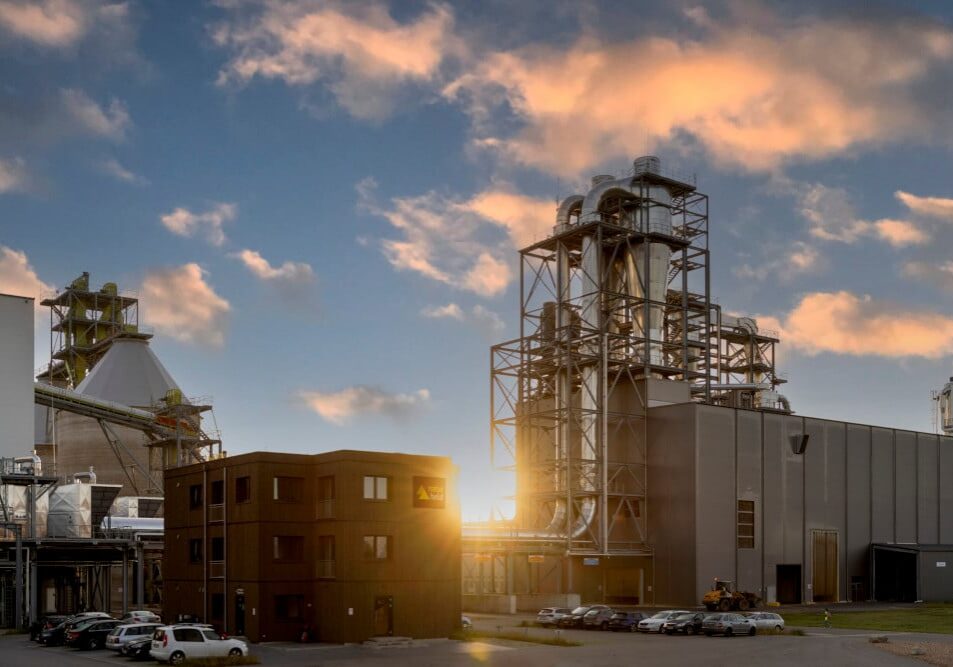
Natural vs Synthetic insulation - Carbon Emissions
Explore the difference in carbon emissions throughout the lives of both insulation types.

Extreme heat and Insulation
Good insulation should protect homes from summer overheating as well as keeping homes warm, find out how?
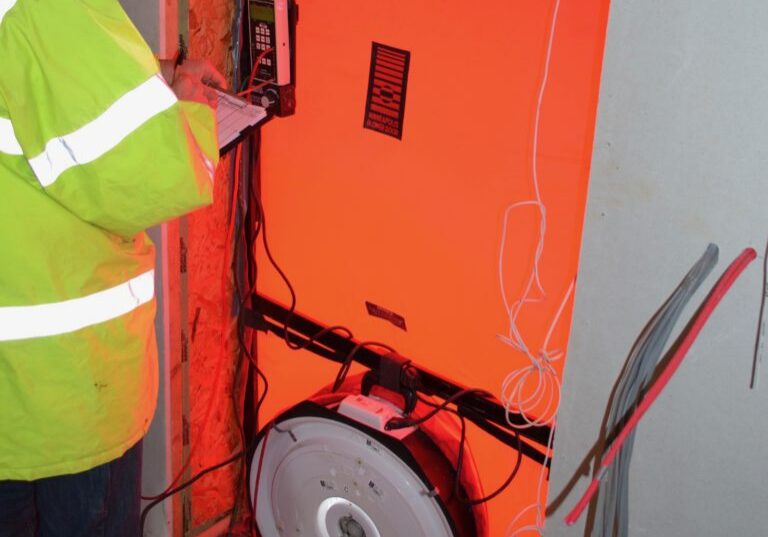
Airtightness - beginners guide
Find out what airtightness in buildings is, why its important and, how it can eliminate drafts in your home.
Explore all resources under understanding performance...
Industry news

https://www.youtube.com/watch?v=rx2djebpAvE&t=2s
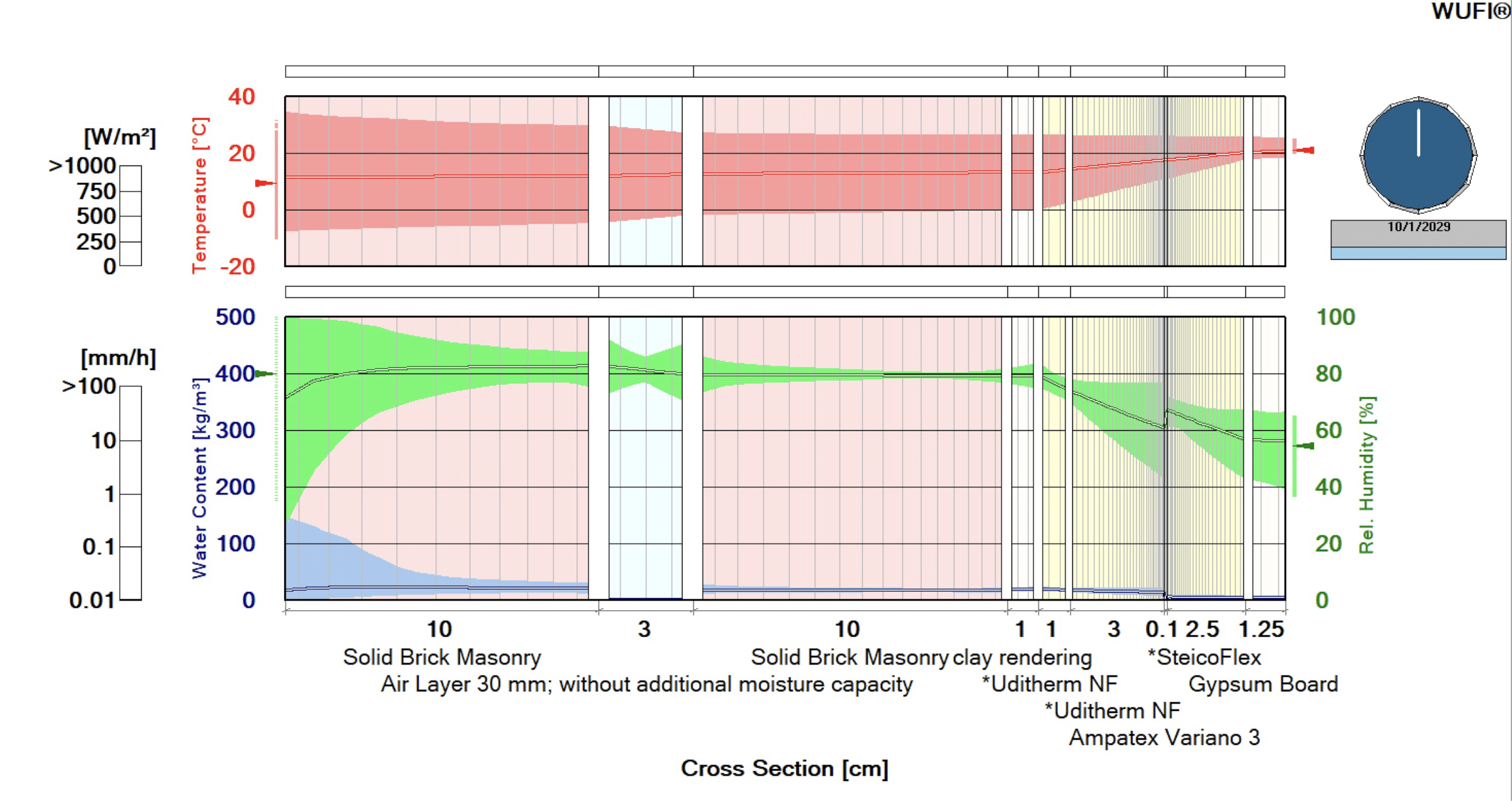
The wide range of membranes available reflects the fact that no single product can reliably perform across all building types, exposure conditions, and moisture dynamics. Externally, membranes range from basic breather membranes for short-term protection through to monolithic, UV-stable, and TPU products for long-duration exposure, low-pitch roofs, and open facades. Internally, the spectrum runs from highly vapour-permeable airtightness layers — used where solid walls need to retain maximum inward drying capacity — through to variable diffusion membranes and stronger vapour retarders for metal-clad buildings or high-humidity environments. The modelling and membrane selection is handled through proper hygrothermal analysis; the range exists so the best membrane for each specific set of conditions can actually be specified.
Industry news

https://www.youtube.com/watch?v=6Hdc8IilsBA
Decrement delay describes how a building's fabric slows and reduces the transfer of external heat to the interior — a combination of the decrement factor (how much of an external temperature swing reaches the inner face) and the delay (how many hours it takes to get there). Wood fibre's high density and specific heat capacity give it a delay of around 15–16 hours in a standard build-up, meaning the heat from a summer afternoon doesn't arrive inside until temperatures outside have already dropped — compared to around three hours for mineral wool, six for PIR, and as little as two for polystyrene. It's one of the most effective passive tools available for managing summer overheating without mechanical cooling.
Industry news

https://www.youtube.com/watch?v=aBbRx9g-evE
Psi values measure the additional linear heat loss that occurs specifically at junctions — around windows, at corners, and wherever two building elements meet — capturing what U-values alone don't account for. They feed into SAP alongside U-values to give a more complete picture of overall heat loss, but are highly design-specific: any change to a junction detail changes the value. Wood fibre systems tend to produce very low Psi values due to thorough insulation returns at reveals and edges, which can offset a slightly higher U-value target in SAP. In new build, minimising Psi values is increasingly where energy efficiency gains are found; in retrofit, the focus shifts to moisture safety — ensuring junction detailing keeps surface temperatures high enough to prevent condensation and mould.
Industry news

https://www.youtube.com/watch?v=tL_MUicOIJ4&t=42s
Clay plaster is the preferred substrate in BTE's internal wall insulation systems for three reasons: embodied carbon, performance, and reversibility. Applying it flat to the wall first — rather than using a notched trowel to adhesively fix boards directly — ensures full contact with no voids, while clay's minimal processing gives it a far lower carbon footprint than lime. It buffers moisture at least as well as lime, and being water-soluble, can simply be washed off if the system ever needs to be removed, leaving the underlying fabric virtually untouched.
Industry news

https://www.youtube.com/watch?v=Z9qFUfWWIeM&t=15s
For solid-walled properties, the choice between external and internal wall insulation is one of the most common questions in retrofit — and both approaches have genuine merits. External insulation avoids disrupting occupants, allows thicker layers with lower moisture risk, warms the wall fabric itself, and can improve the weather resistance of porous masonry, but comes with practical constraints around roof overhangs, boundary conditions, adjacent buildings, and visual impact. Internal wall insulation is more accessible in those situations and delivers a dramatic improvement in comfort even with relatively thin layers, raising internal surface temperatures quickly and addressing airtightness in the same operation — though it requires a carefully considered specification to manage moisture risk around embedded timbers and inward drying capacity. In practice the two aren't mutually exclusive, and some projects call for a combination of both; what matters in either case is that the specification is matched to the specific building rather than applied as a generic solution.
Industry news

https://www.youtube.com/watch?v=Z9qFUfWWIeM&t=15s
Show more16:00Claude responded: Airtightness, breathability, and vapour control are three closely related but distinct concepts that are frequently misunderstood.Airtightness, breathability, and vapour control are three closely related but distinct concepts that are frequently misunderstood. Airtightness means eliminating uncontrolled bulk air movement through the fabric — it has nothing to do with ventilation, which can and should still happen in a controlled way. It matters because moving air carries far more moisture than vapour diffusion alone, depositing it inside the fabric where it causes damage. A material can be simultaneously airtight and vapour permeable because vapour molecules are orders of magnitude smaller than air molecules, allowing diffusion through pores that block bulk airflow entirely. This means the right membrane for an internally insulated wall — where inward drying needs to be preserved — is airtight but vapour open, while a roof assembly might call for an airtight vapour retarder instead. The distinction between a vapour retarder and a full vapour barrier matters here: most well-specified assemblies use a membrane with an SD value of five to around 100, slowing moisture ingress to a manageable rate while retaining some drying capacity. A true vapour barrier on the wrong side of the wrong assembly will cause condensation to accumulate over time — choosing the right membrane for the application is where vapour control strategy either protects a build-up or quietly undermines it.
Industry news

https://youtu.be/pppC6-IsT94
In this episode, Chris sits down with Andy to tackle a question that's become increasingly relevant after last week's 30°C+ temperatures across the UK — why do well-insulated homes still overheat? Andy explains that U-values, while important, are just one piece of the puzzle, and that a singular focus on thermal conductivity often leads to buildings that perform well in winter but become uncomfortable in summer. He walks through the key factors at play — airtightness, window orientation, and crucially, the thermal properties of the insulation itself — and makes the case for wood fibre as a material that genuinely addresses the overheating problem. With a decrement delay of over 16 hours compared to around two and a half for fibreglass, wood fibre slows heat movement through the fabric dramatically, meaning peak external temperatures never really make it inside. A timely watch for anyone who's been sweating in a supposedly energy-efficient home.
Industry news

https://www.youtube.com/watch?v=ZblFjoIQG4E
In this episode, Chris sits down with Marion for her first appearance on Can I Just Ask, talking about PAS2035, a subject that's well within her wheelhouse as a retrofit specialist. Marion explains that PAS2035 is a framework designed to make sure retrofit projects are delivered properly, from initial assessment all the way through to post-occupancy evaluation, with the right people involved at every stage. She walks through the key roles (retrofit coordinators, retrofit designers and installers working under the companion standard PAS2030) and clarifies that the scheme only applies to government-funded projects like ECO or Warm Homes Grant. It's a clear, jargon-light breakdown of a framework that affects a huge amount of retrofit activity in the UK but rarely gets explained in plain English.
Industry news

https://www.youtube.com/watch?v=gXE1u_34tAk
Wood fibre insulation being made from natural material does raise the odd eyebrow when it comes to pests, but the concern is largely unfounded. The manufacturing process removes the sugars that wood-boring insects are actually after, and the material doesn't provide the dense structure they need. Rodents will nest in any insulation if they can get to it, but that's a detailing problem, not a material one. Good airtightness and careful sealing at junctions is what keeps pests out.
Industry news
https://www.youtube.com/watch?v=nZCA7AD-FHU&t=1s
Wood fibre insulation earns its place in specifications for technical reasons as much as environmental ones. Its high thermal mass slows heat transfer and helps keep buildings cool in summer, which is increasingly important. It friction-fits into place without gaps, making real-world performance much closer to designed performance. It also handles moisture well, allowing vapour to move safely through the structure rather than trapping it. Practical, reliable, and genuinely low-carbon — it's one of the few materials that delivers on all fronts.
Industry news
https://www.youtube.com/watch?v=JQ0K5D3rVoM&t=11s
PIR has a lower thermal conductivity than wood fibre, but that single metric misses a lot. Wood fibre outperforms it on acoustic absorption, handles moisture on site without losing performance, and its thermal mass helps prevent summer overheating — something PIR does nothing to address. From a fire safety perspective, PIR can produce toxic fumes before flames take hold, while wood fibre burns slowly and predictably. Add in the carbon footprint difference and the easier installation, and wood fibre makes a compelling case across the board.