
PRODUCT SEARCH
Find high performance, low impact materials for your building project.
Interstitial Condensation in Walls
When designing wall constructions or retrofitting existing walls, there are many areas to consider but one issue that people are recommended to prevent is allowing the formation of Interstitial Condensation. Interstitial condensation can occur in all building elements (walls, roofs and floors) but here we are focussing on walls.
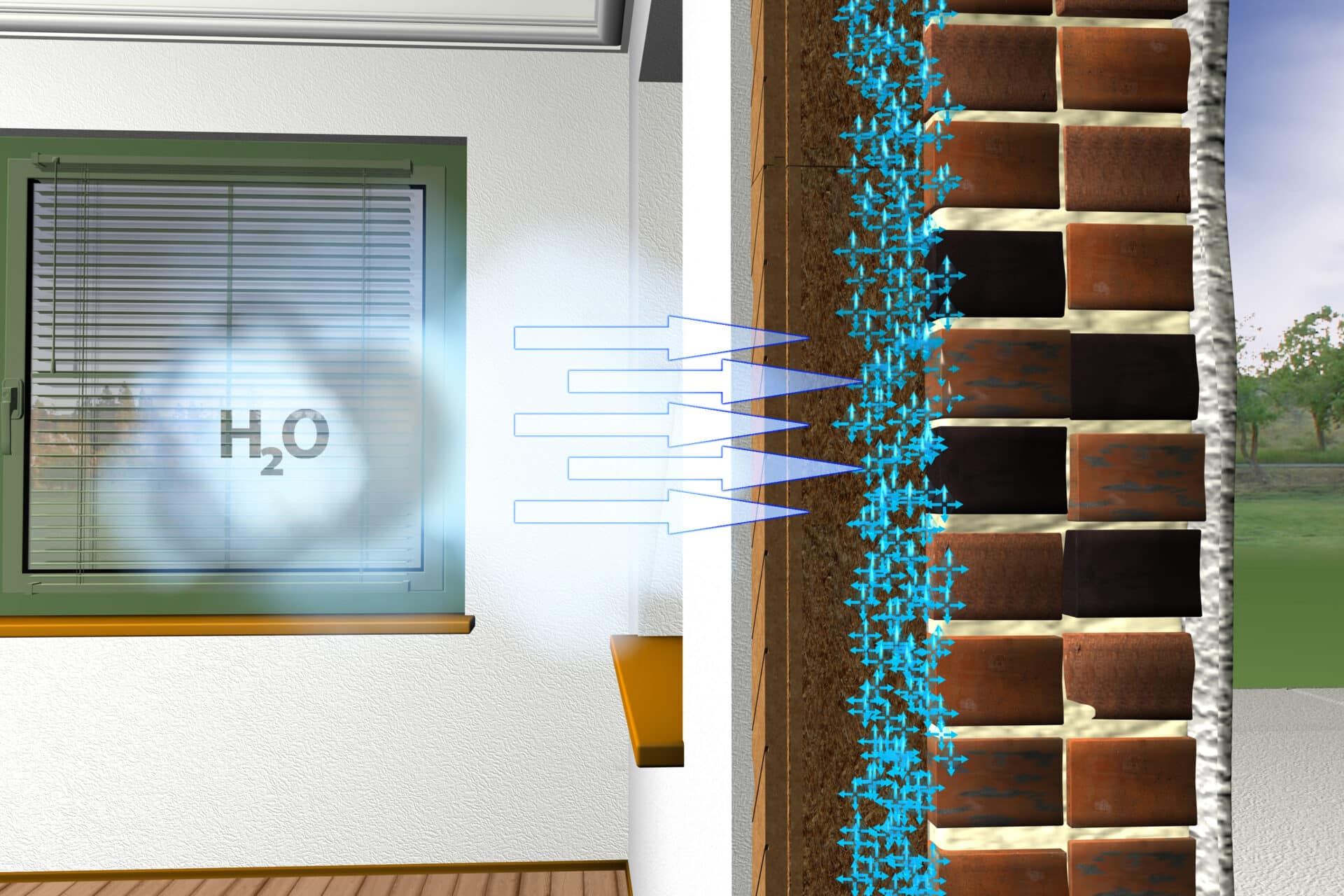
What is Interstitial Condensation?
When moisture vapour passes from a warm space through a wall towards a colder environment, it will reach a point within the wall where the temperature drops enough for it to condense into liquid water, often referred to as the dew point, This condensate is known as Interstitial Condensation and in the UK it mostly forms during the colder months as moisture flows from the warm interior of a building through the cold fabric.
Technically ‘interstitial’ means the spaces between layers but in vapour permeable materials, such as brick, stone, insulation products and plasters, the condensation can occur within the pores of the material rather than only layers between materials.
How does Interstitial Condensation occur?
There are three main ways that moisture from the warm interior of a building can reach and condense in the cold parts of a wall.
The first and quickest way is through air leakage. This occurs when warm, moisture carrying air from the interior of a building leaks through all of the gaps, sockets, switches and cracks in the internal surfaces of a building with no continuous air tight layer. This air flow reaches the cold parts of the walls quite easily, begins to condense and because it is continuous, can carry huge amounts of moisture into the wall.
This commonly happens behind ‘dot and dab’ or battened plasterboard installations where warm air from the interior of the building can leak into the cold cavity, forming condensation and the ideal conditions for mould to form.
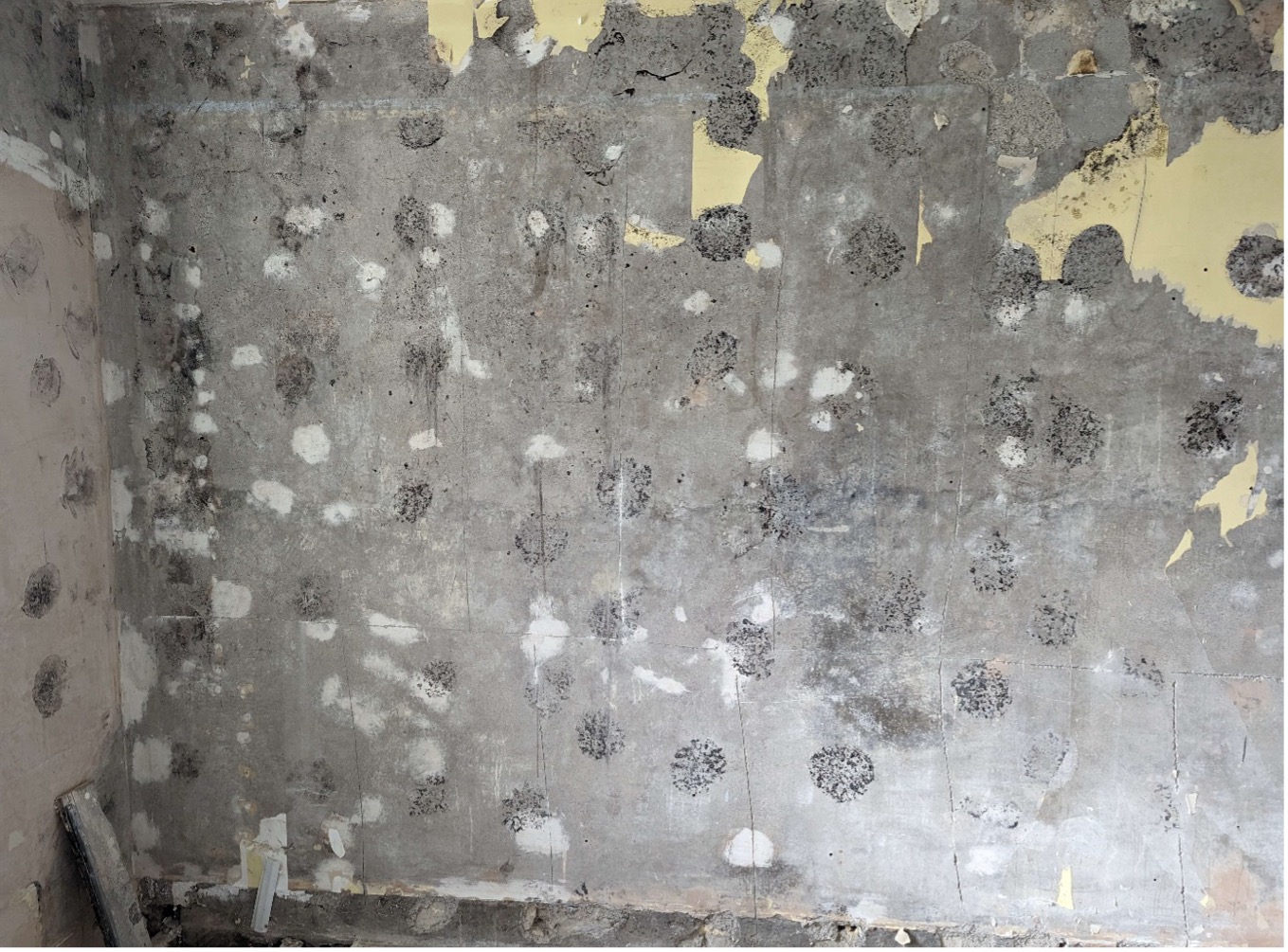
The second way is through vapour diffusion. Heat and moisture move together and during the colder months heat and moisture (that is held within the air) diffuse through the fabric of the building and when uncontrolled, can cause an excess of moisture within the building fabric. Based on this it would seem sensible to use vapour closed insulation if insulating internally but unfortunately this causes an accumulation of moisture within the wall and rots any embedded timbers.
The final way is through reverse diffusion from the exterior towards the interior. This occurs when the heat of the sun warms surfaces (usually brickwork or timber walls) so that the heat flow reverses and heat travels towards the interior. As heat and moisture move together, moisture travels towards the interior of the building and may reach areas where it can condense.
Why is Interstitial Condensation a problem?
When combined with air, the formation of high levels of humidity or liquid water on non-porous or low porosity surfaces within a wall or other building structure allows mould and fungi to grow. Fungi will usually start to consume timber products (joist ends, studs, lintels, etc.) and so present a long term issue to the structural safety of the building.
Moulds produce spores which are released into the air and when the wind blows these spores are transferred into the air within the building. This is a more immediate issue as the spores directly affect the health of the occupants and can cause asthma and other respiratory diseases, as well as affecting the overall health of the occupants.
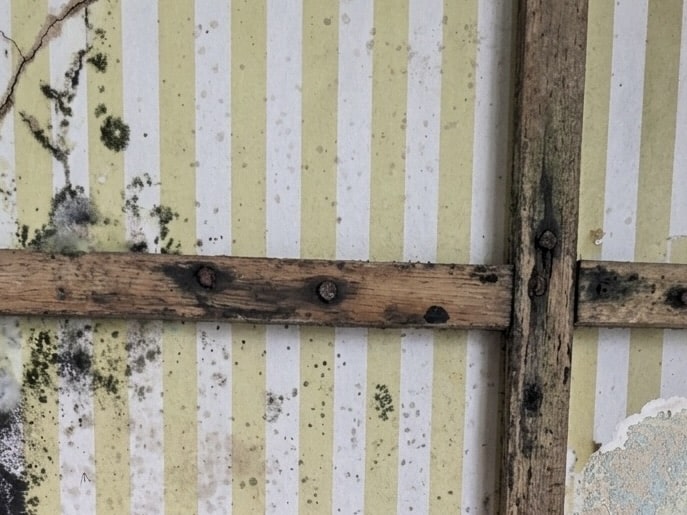
The Housing Health Safety Rating System mentions mould and damp as specific risks to occupants and so it is vital that mould is prevented from growing in and on building elements and if found, it must be investigated within 24 hours remedied quickly after.
Does breathable insulation prevent Interstitial Condensation?
Breathable insulation doesn’t stop interstitial condensation per se and in some cases it allows more moisture to penetrate a wall from the interior. However, when you use a hygroscopic insulation, such as wood fibre insulation or Multipor mineral insulation, that is fully bonded to the wall to prevent air from reaching the interface between the masonry and the insulation, you can prevent the formation of liquid water and ensure that any moisture is bonded to the insulation and not free to encourage mould or fungal growth.
Hygroscopic insulation is an insulation that can adsorb and release water molecules within the pores of its structure without formation of liquid water, so as to buffer humidity within a construction and help to prevent mould growth. In these kinds of products there are however, other moisture related issues that can occur below the point at which liquid condensation occurs that need careful consideration.
Synthetic fibres such as glass or mineral wools are vapour permeable but don’t adsorb significant amount of moisture so will allow the formation of liquid condensation on the surface of the fibres readily. These fibrous insulations are full of air too and so often allow the growth of moulds within the insulation when conditions are right.
Does a vapour control layer prevent interstitial condensation?
Reducing the flow of moisture from the warm interior of the building into a cold wall will definitely reduce the risk of interstitial condensation as well as the amount formed. This may be achieved by adding a vapour control membrane but it must be well installed to prevent air leakage or bypass around it and a worsening of conditions.
However, the moisture levels and temperatures within walls are dynamic and constantly changing and using a membrane or other barrier to simply reduce moisture flow from the interior will only benefit at certain times of the year. Walls need to dry towards the interior too and so restricting vapour flow can cause more moisture within the wall and may make the risk of mould worse.
Selecting which membrane is suitable for an internal wall insulation solution requires careful consideration and should be carefully calculated using hygrothermal modelling software, such as WUFI.
How to prevent Interstitial Condensation in retrofit
When internally insulating walls, the simple act of adding internal insulation will raise the amount of moisture within the wall but the amount and type of insulation will dictate how much moisture levels rise and whether this becomes a problem.
Impermeable insulations, such as PIR, should not be used on solid masonry but may be suitable for lining un-filled block cavity walls. The use of mineral or glass wools for internal insulation should be limited to walls with a limited requirement for inwards drying and low internal moisture levels, such as within urban heat islands or walls with weather protection such as render or cladding.
As a general rule, adding up to 40mm of a breathable, hygroscopic insulation, such as wood fibre insulation, to the interior of the wall is very unlikely to raise moisture levels to a point where they become problematic. Beyond this, using software tools, such as WUFI, to undertake dynamic hygrothermal modelling is the safest way to assess a specification and determine whether or not it is likely to cause problems.
Higher levels of internal insulation may be applied to walls by combining materials, such as wood fibre insulation, with variable vapour control membranes which vary their vapour resistance with humidity, helping to provide resistance when needed but allow walls to dry inwards when necessary. This may be combined with masonry water repellent creams applied to the exterior to prevent moisture penetration from rain.
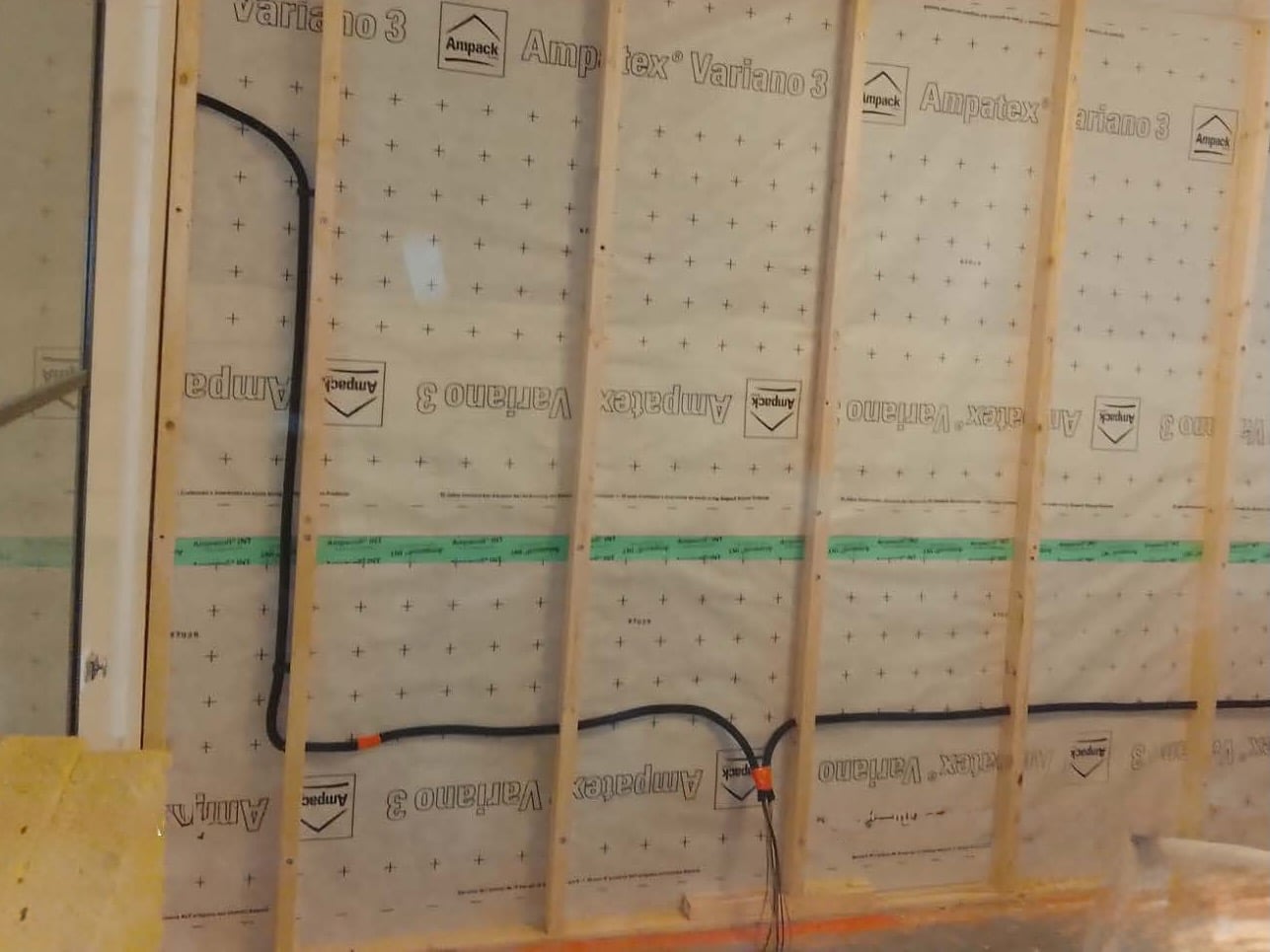
All of these strategies can be modelled with hygrothermal modelling software to produce a breathable internal wall insulation system that achieves good thermal comfort, minimises moisture risks within the walls and risks to embedded timber and produces the most healthy solution for the occupants.
For more advice on how to internally insulate your walls and avoid condensation risks, please contact us.