
PRODUCT SEARCH
Find high performance, low impact materials for your building project.
Visiting NaturHeld’s wood fibre insulation factory
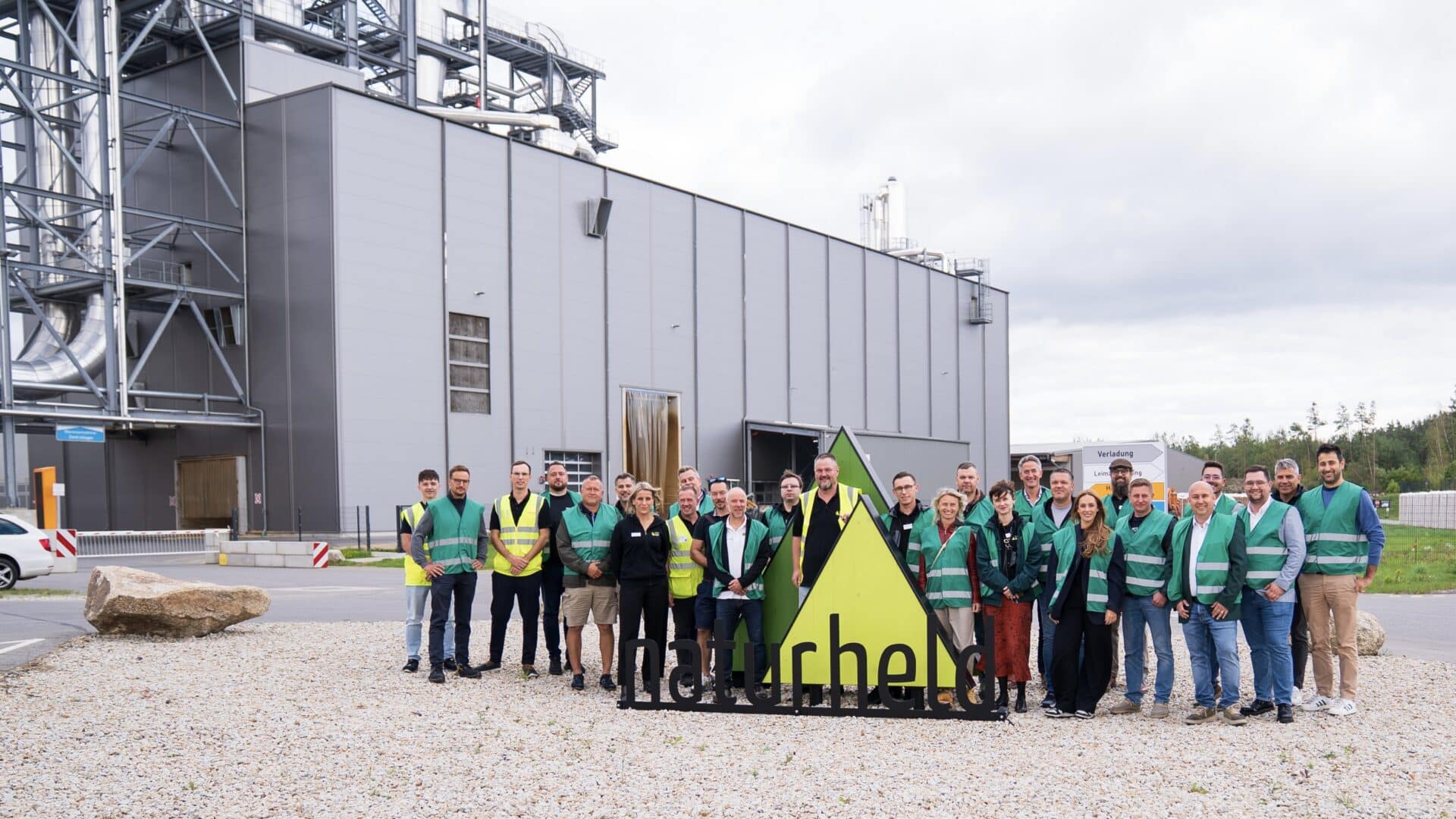
One of the newest and most forward-thinking factories producing wood fibre products in Europe.
On the 21st of September we were invited to the NaturHeld factory in Oberpfalz (Northern Bavaria), near Nuremburg to visit their €250m wood fibre insulation production site and we thought we’d share what we found. NaturHeld, although a newcomer to the market, already supply roughly 10% of the wood fibre insulation used in Europe and produced just over 700,000m3 of insulation this year.
It is an incredibly impressive site due to the large amount of renewable energy used and the closed water cycles in production, so that almost nothing goes to waste and almost no waste is produced. The plant uses 75% renewable energy produced on site, mostly from burning biomass in a highly efficient furnace to produce the heat and steam involved in the manufacture of the products. Solar PV also provides electricity to the plant, giving them one of the best EPD’s for wood fibre insulation products in the market place.
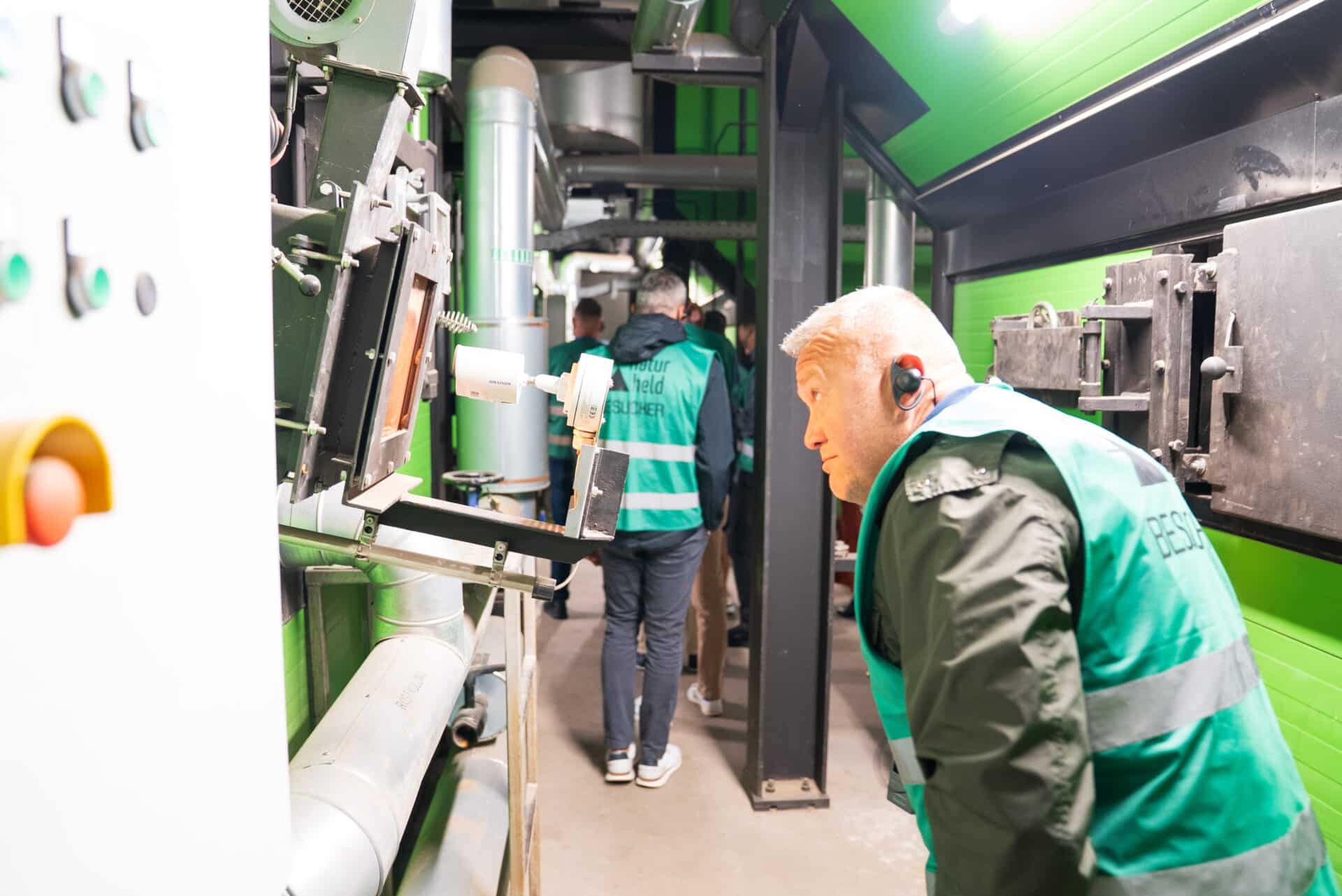
Wood fibre insulation is made from all of the waste from lumber production. Firstly, bark is taken from sawmills for very little as it comes free with the lumber that sawmills buy to produce solid timber products and is brought into the factory to power the furnaces to produce heat for the manufacturing processes. Secondly, any waste timber that cannot be used for lumber is turned into wood chips, brought to the factory and processed into wood fibre insulation.
These wood chips are unloaded and blown into two huge silos before mixed with steam to soften them before they go through a fiberiser. It is quite amazing looking at the tiny 1.2m wide plates processing the chips, they’re so small compared to the vast quantities of wood chips and the 5 acres of factory!
The fibres are then blown in a flash drier with the exhaust gasses from the furnaces to remove the almost 50% moisture that is contained in the original wood chips. All of the dust and un-useable fibres are then removed and the fibres are separated into fine fibres for wood fibre board production and the coarser fibres for flexible insulation and blown fibre insulation. The dust is sent on to a different company for use as pet litter and the un-useable fibres go back into the biomass furnaces. Nothing goes to waste at all!
The machines that then create the wood fibre boards and the flexible insulation are truly awe-inspiring in terms of size and complexity. For the boards, the next step is to mix a glue called pMDI (a polyurethane derivative) which is added in such tiny quantities that when you feel the fibres, you cannot detect it’s presence whatsoever.
The fibre/glue mix is compressed and then quickly runs through a steam oven to cure the glue and form huge sheets of board at the correct thickness and density. The wood fibre boards run through a fully automated process where they’re cut, profiled palletised and wrapped before being warehoused, ready for sale.
To create the flexible wood fibre insulation, small amounts of a very fine 2-component polyester fibre (that looks for all the world like cotton wool) are added to bind the wood fibres together. Each polyester fibre can bond with up to 100 wood fibres and so only 3-4 % by mass is added to create quite a firm batt.
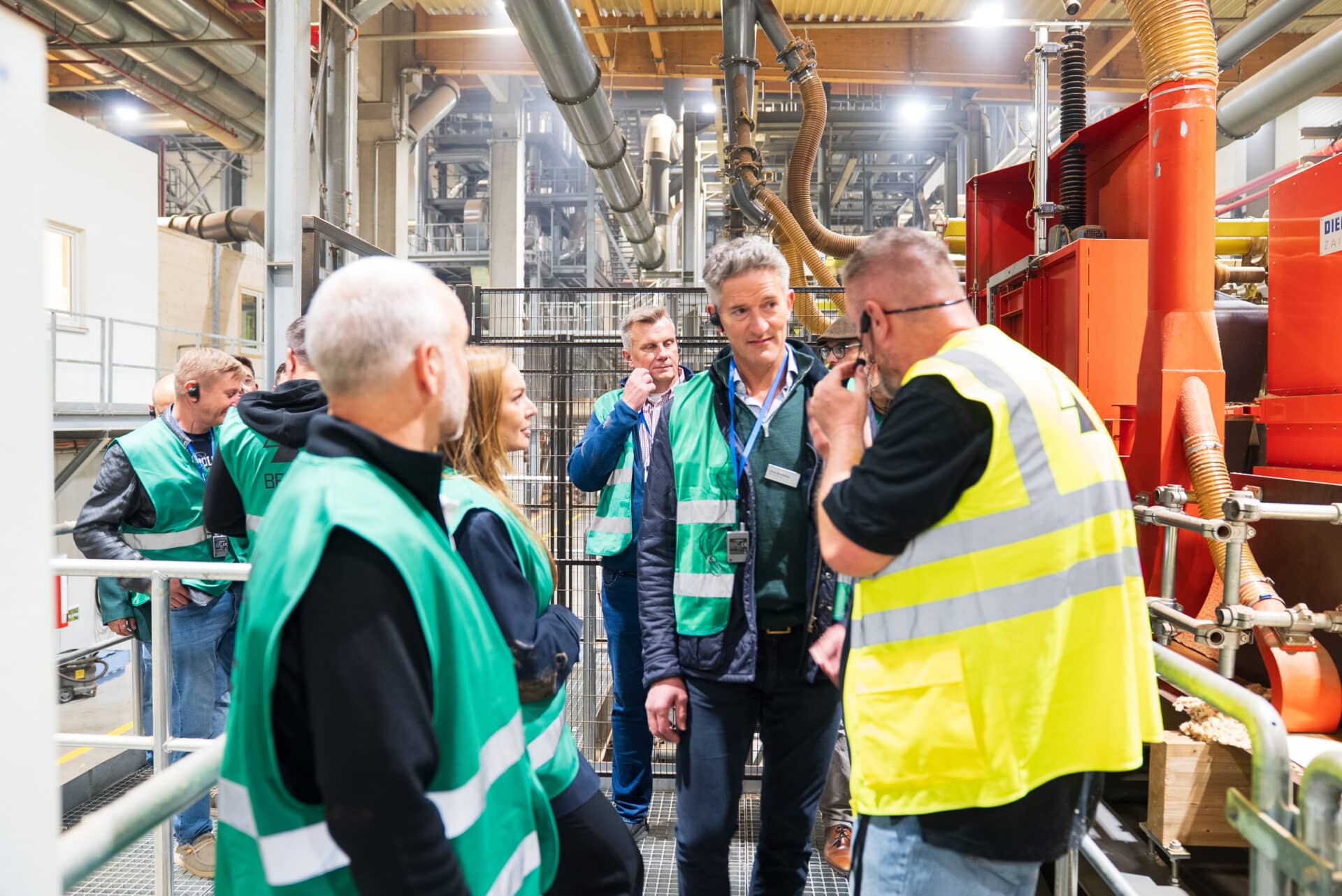
Precise amounts are laid on to a conveyor and compressed to the right thickness and density before going through an oven where hot air is blown through the mix to melt the surface of the polyester fibres, ensuring it bonds to the wood fibres. Again, large slabs of this flex product come out of the machines which are cut and packed in fully automated processes. The size and complexity of these factories is incredible and the amount of technology that goes into production of ‘simple’ insulation is vast.
The impact of the construction of such a behemoth is obviously considerable on the local environment and the carbon emissions from the machinery would be significant too but it is reassuring to know that the running of the plant adds little carbon load to the atmosphere and the benefits of the switch away from high carbon mineral fibre or plastic insulation are considerable.
If you’d like to know about how NaturHeld insulation can benefit your project, see our NaturHeld wood fibre boards or NaturHeld flexible wood fibre insulation, or contact us.