PRODUCT SEARCH
Find high performance, low impact materials for your building project.
Wood Fibre Insulation
Materials
Specification generator
Find out which low impact materials are right for your building project.
What is wood fibre insulation?
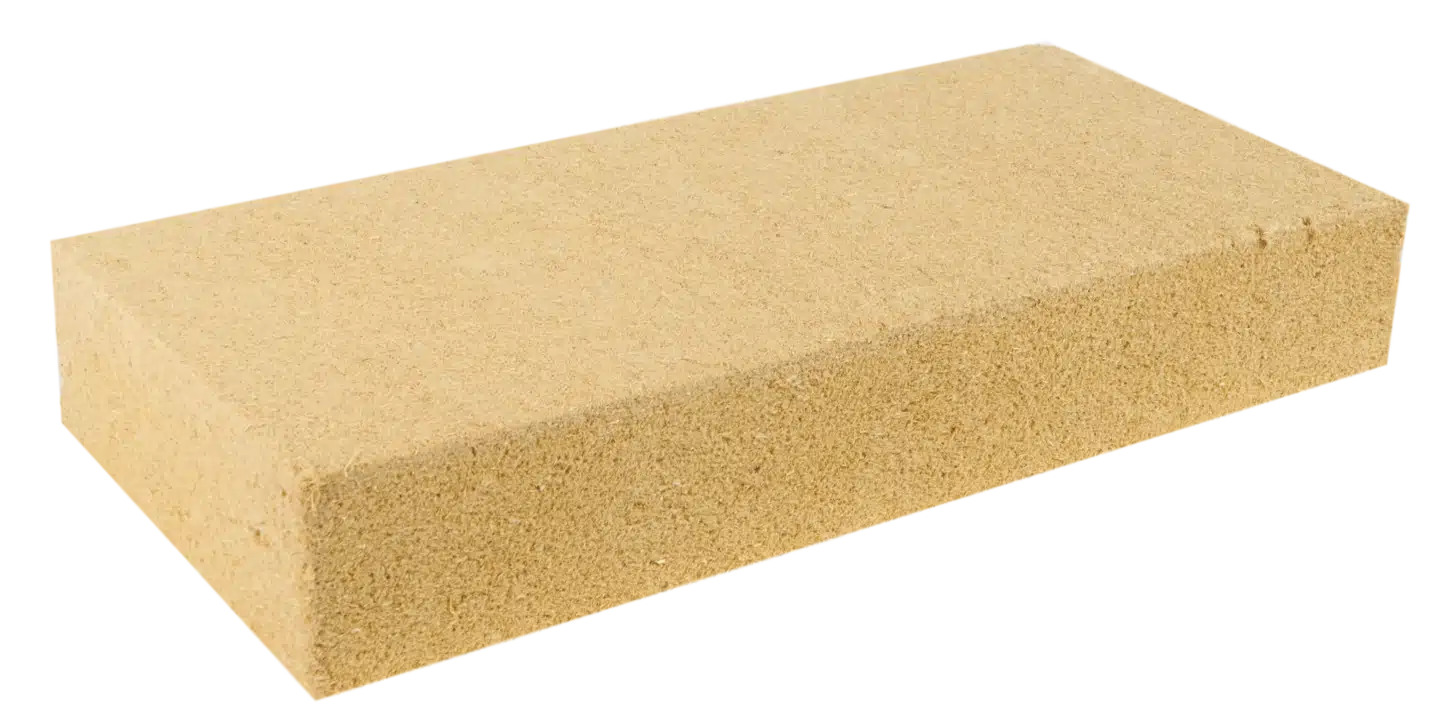
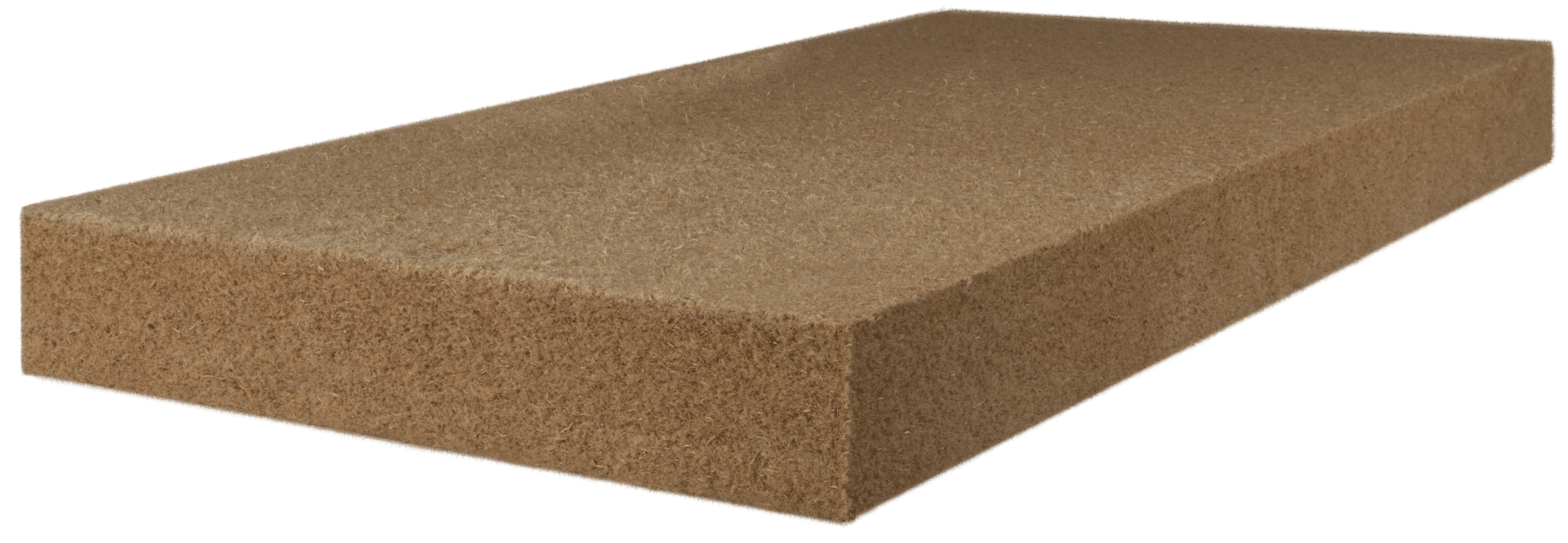
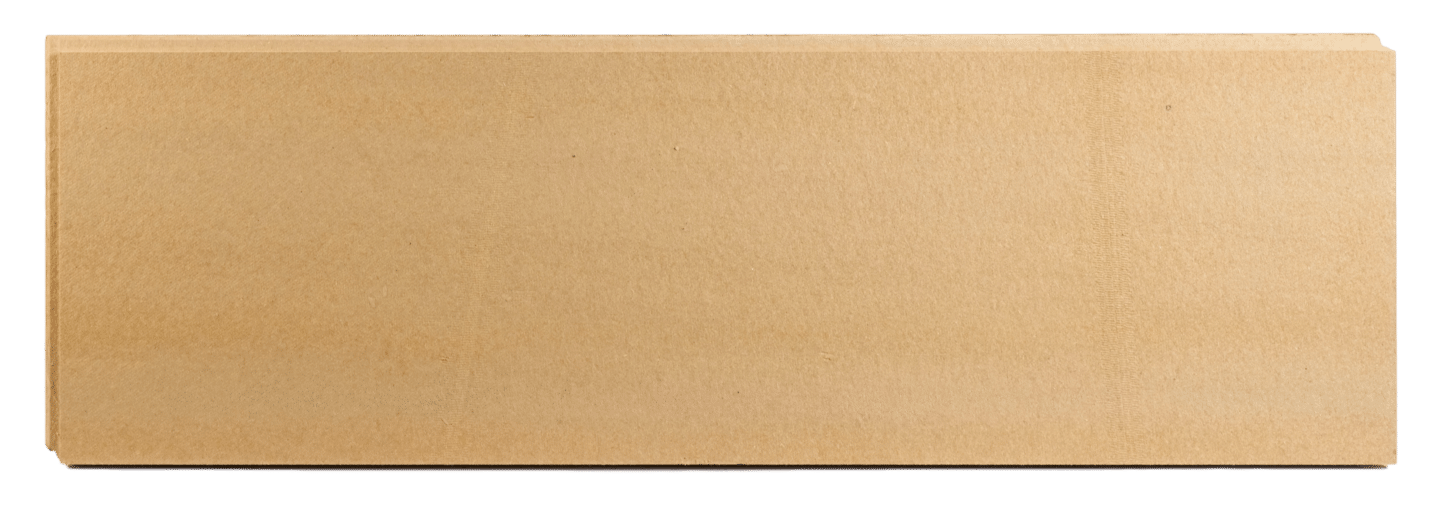
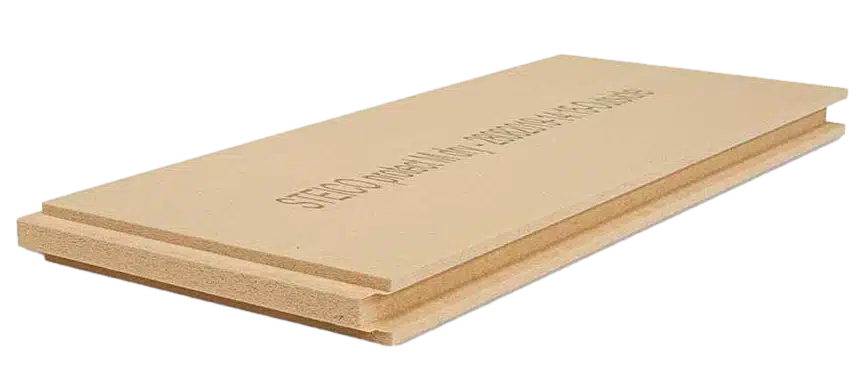
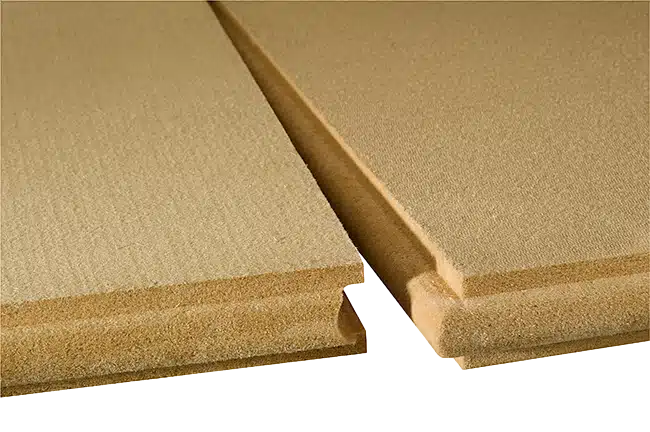
Wood fibre, or woodfibre, insulation is a dense, highly vapour permeable natural fibre insulation made from waste virgin wood from producing other timber products, such as construction timber. Wood waste is ground down into fibres and mixed with other products to produce the rigid boards and flexible batts you can see below.
Wood fibre insulation has been used in Europe for more than 50 years in different forms and it is a well used, well understood material with many technical approvals and certifications for use.
Why use wood fibre insulation?
It has quite unique properties that make it an exceptional all-round insulation material, particularly for roofs and walls. These properties create very comfortable and healthy living spaces and its sustainability can help reduce the impact of construction on the environment. Being made from waste wood, wood fibre insulation helps store carbon from the atmosphere by containing it in the fabric of your building.
Woodfibre insulation is well known for its amazing acoustic properties due to its high density and vibration absorbing structure. Its high thermal mass (due to high specific heat capacity and density) brings winter comfort but most importantly it provides very effective shielding from the sun, keeping buildings comfortable in the summer heat.
The simplicity of construction used makes it extremely effective at achieving energy targets in buildings, when high quality work is required. Its durability with moisture makes it ideally suited to the wet UK climate as it enables fast drying of timber structures and it has good sustainability credentials, being made from a waste material. To discover more about the benefits of wood fibre insulation in detail, see our article Eight reasons to use wood fibre insulation.
Where can wood fibre insulation be used?
Flexible wood fibre insulation can be used very effectively between timbers, whether studs, joists or rafters. Its high density and slump resistance means that it is easy to get a firm fit that eliminates air pockets in timber structures as well as providing very effective sound absorption.
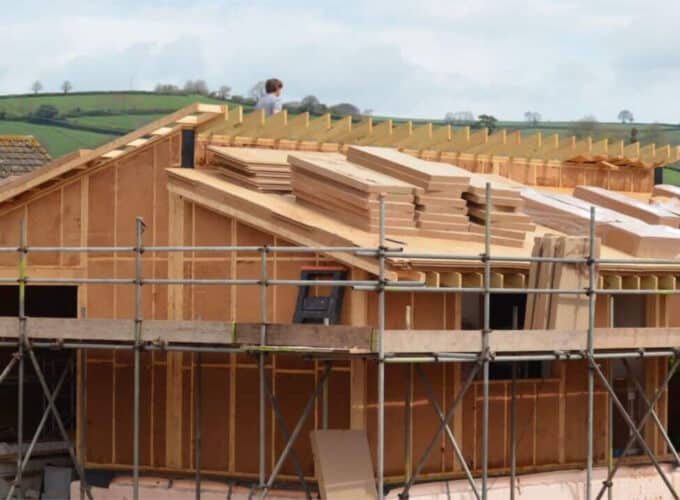
Woodfibre boards can be used to insulate roof structures to provide thermal and acoustic insulation. They can be used externally over the rafters or internally, fixed to the underside of rafters. Out of all the locations, this is where wood fibre insulation can provide the most effective thermal comfort through its ability to reduce summer overheating.
Wood fibre boards can also be used to insulate timber framed structures, both internally or externally. When used externally, they can be used as a render carrier for through-coloured, thin-coat renders.
Wood fibre insulation is very effective in retrofit, particularly with internal wall insulation of solid walls, due to the unique way it manages moisture while retaining its thermal insulation properties. In this location we specifically recommend wet-process insulation boards, due to their higher ability to transport moisture.
Woodfibre boards can also be used externally on masonry as effective external wall insulation. Again its ability to manage moisture makes it very useful when working with older buildings that rely on vapour permeability in the wall surfaces.
What is different about this wood fibre insulation range?
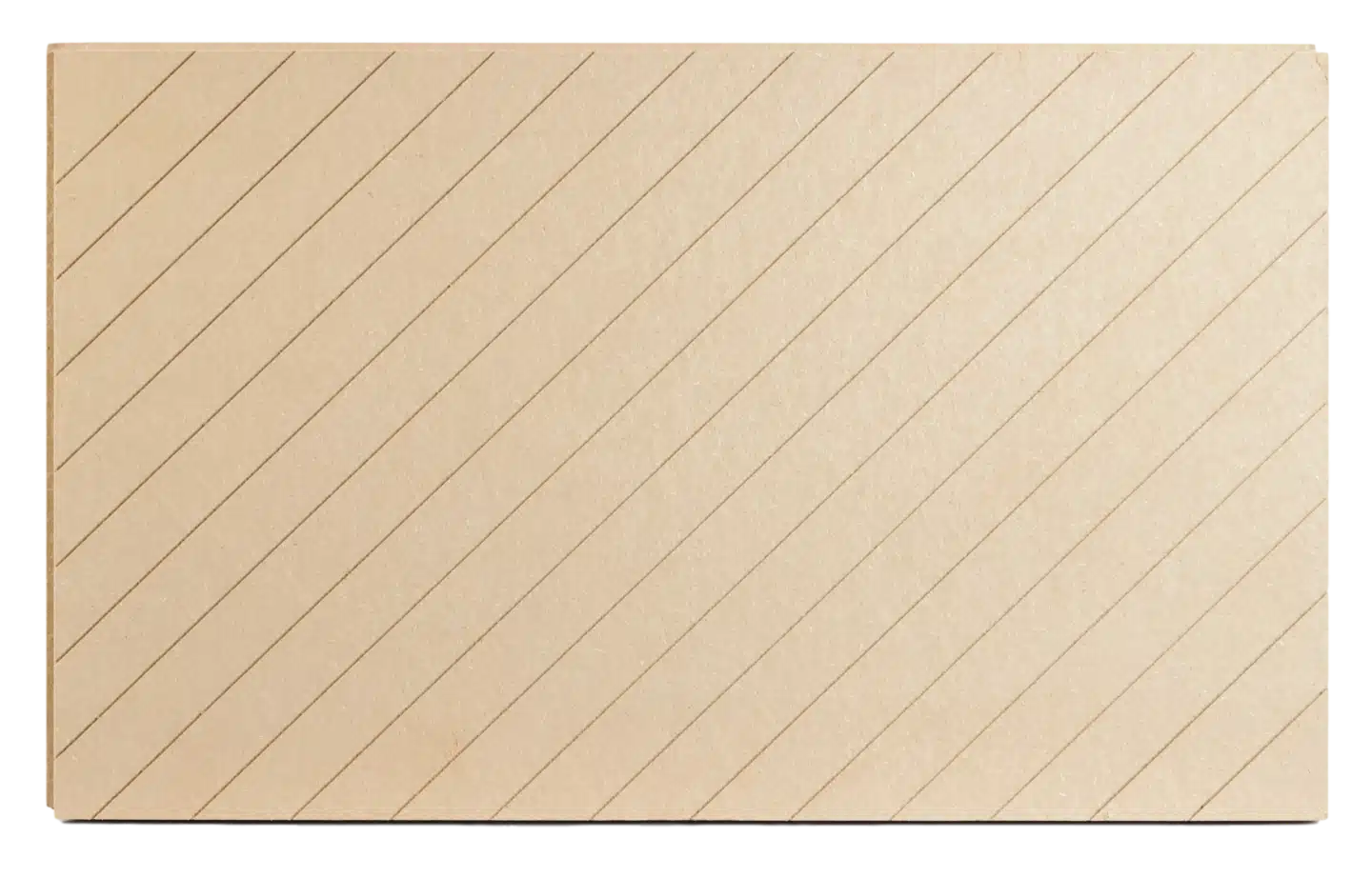
We have curated an extensive range of wood fibre boards, from a selection of different manufacturers, chosen for their unique properties. Each board excels in a specific area that makes it useful within our bespoke specifications, such as thermal mass, acoustic insulation, impact resistance or thermal insulation.
This is our full range of wood fibre insulation boards and flexible products and although they can all be used on roofs, walls and floors, some are better than others in certain locations. The range contains both wet process and dry process boards, which have different properties and can be used to tailor the way the building performs.
If you do need any help deciding which wood fibre insulation product will work for you, please feel free to use our Specification Generator which will create a specification with the correct wood fibre materials and thicknesses for you.
Alternatively, please feel free to contact us to discuss your requirements further.
Wood fibre insulation technical performance
The flexible woodfibre insulation batts in the range below all have very low thermal conductivity of 0.036 W/mK, which is very low conductivity even compared to synthetic fibrous insulations. However, when this is combined with its high density (50-55kg/m³) it gives exceptional acoustic insulation as well as high thermal mass to keep you cool through the summer heatwaves.
The wood fibre boards' properties vary from a thermal conductivity of around 0.037 W/mK and a density of 110kg/m³ for the square edge Beltermo Kombi boards up to 0.048 W/mK and a density of 240 kg/m³ for the high density UdiSPEED wood fibre render carrier boards.
When the high density of these products is combined with woodfibre's high specific heat capacity of 2100 J/kgK, you get very low thermal diffusivity and very high thermal mass. This gives decrement delay of over 13 hours for quite slender constructions up to 18 hours for the thicker, new-build specifications, ensuring exceptional summer comfort.
Typical roof U-values of 0.15 W/m²K can be achieved with 150mm rafters filled with flexible insulation, with 120mm boards over. Wall U-values of 0.18 W/m²K can be achieved with 150mm studs, filled with flexible wood fibre batts and 80mm woodfibre boards on the outside, with clad or rendered finishes.
It is always tempting to target the lowest U-value but it is important to remember that this doesn't necessarily mean the lowest energy use or the most comfortable as U-value doesn't include time. We have an article on this here if you'd like to read more.
Wood fibre insulation is very vapour permeable (breathable), with vapour diffusion resistance coefficients (µ) of around 1.7 for the flexible insulation and 3-6 for the woodfibre boards.
Wood fibre boards are classified Euroclass E for reaction to fire. In tested systems with an appropriate plaster or render finish, classifications up to Euroclass B have been achieved, and specific wall build-ups using our boards have demonstrated fire resistance of up to REI 90.
How much does wood fibre insulation cost?
There's no getting away from it, wood fibre insulation costs more than synthetic insulation so it isn't for everyone. However, the simplicity of installation means that although the material costs might be higher, the labour costs can actually be lower when comparing comparable performance.
Our wood fibre boards start at £13.53/m2 + VAT for the high density 40mm NaturHeld wood fibre boards and from £12.05/m2 + VAT for the 100mm NaturHeld flexible wood fibre insulation batts.
These costs translate to Building Control compliant wall insulation specifications costing from £41.17/m2 + VAT and roof specifications from £53.11/m2 + VAT for new elements on existing buildings.

External & Internal use
These products can be used for external and internal applications but are not for internal wall insulation on solid walls.
Internal Use
These products should be used internally but may be used externally when covered with an external board.