
PRODUCT SEARCH
Find high performance, low impact materials for your building project.
Understanding Performance
Monitoring guidance, performance data and analytical resources for anyone assessing how a building is performing. Everything you need to understand what's working, what isn't, and why.
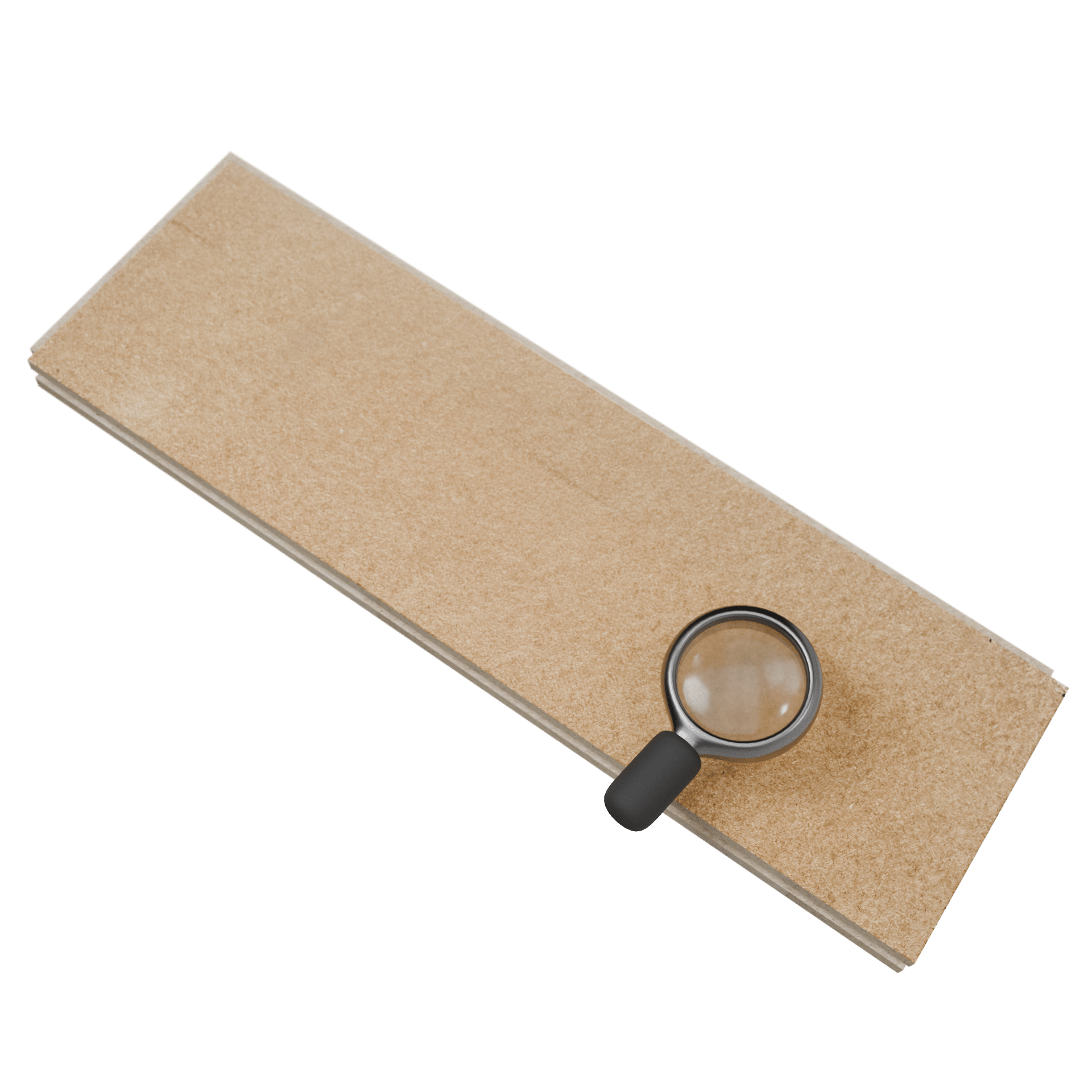
Start here.
Not sure what to dive into first? We recommend starting with these...
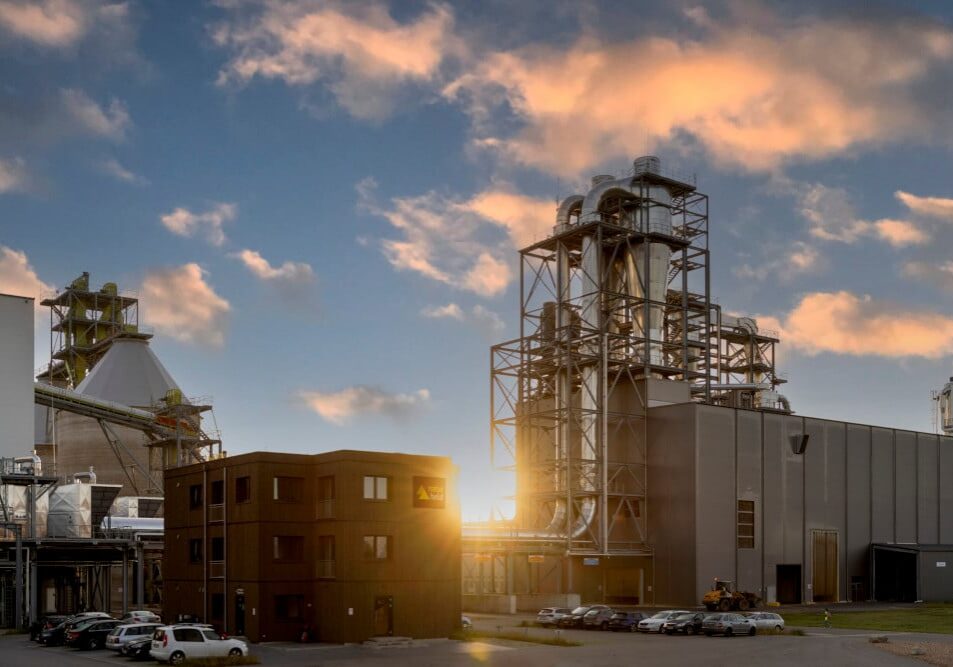
Natural vs Synthetic insulation - Carbon Emissions
Explore the difference in carbon emissions throughout the lives of both insulation types.

Extreme heat and Insulation
Good insulation should protect homes from summer overheating as well as keeping homes warm, find out how?
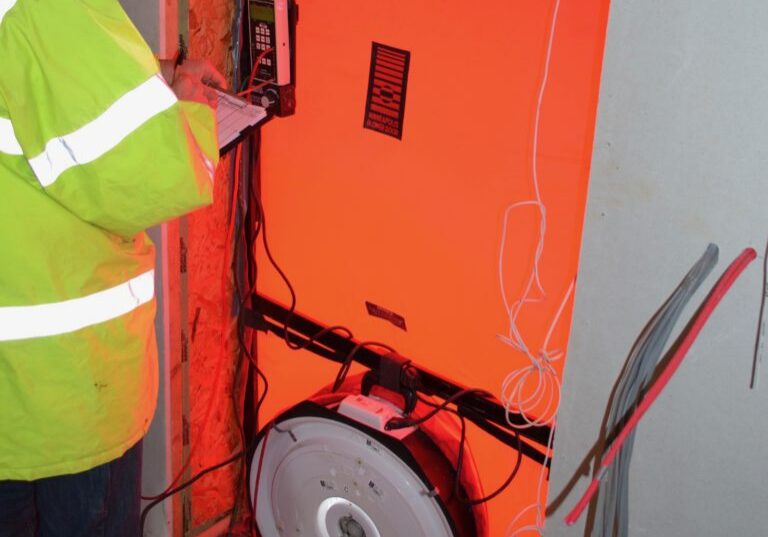
Airtightness - beginners guide
Find out what airtightness in buildings is, why its important and, how it can eliminate drafts in your home.
Explore all resources under understanding performance...
Industry news

https://www.youtube.com/watch?v=ICJirHoFQHk
There's a persistent worry that internal wall insulation seals a house up so tightly it becomes unhealthy to live in. In this episode, Andy Banister and Chris Brookman unpack why airtightness and ventilation are two separate things, why a continuous layer of insulation actually helps prevent mould, and why a well sealed home is good for both comfort and health through winter cold and summer heat alike.
Industry news

https://youtu.be/S38y7ZwwCe4
Ever noticed how a well retrofitted home just feels more comfortable, whatever the weather's doing outside? In this week's episode, Andy explains why two rooms at the same temperature can feel worlds apart, and how continuous insulation, airtightness and a good ventilation strategy keep you warmer in winter and cooler through a heatwave. He also gets into why wood fibre is so well suited to holding onto that overnight cool, often with no air conditioning needed at all.
Industry news
https://youtu.be/3-YHD-wQ_MU
Yes, technically — but it depends where and why. In flat roofs, a hybrid build-up can work well, such as XPS beneath the roof covering augmented with wood fibre in the rafter zone (subject to project-specific analysis). In pitched roofs, swapping in some PIR can reduce thickness while still hitting your target U-value, but every factor besides U-value — thermal mass, acoustic performance, fire performance — tends to get worse, so sticking with one material is usually the better call. Where the two abut, such as a wood fibre wall meeting PIR or XPS elsewhere, there's no issue as long as each specification is consistent and the junction maintains continuity of the insulation and airtightness layers.
Industry news

https://youtu.be/pppC6-IsT94
In this episode, Chris sits down with Andy to tackle a question that's become increasingly relevant after last week's 30°C+ temperatures across the UK — why do well-insulated homes still overheat? Andy explains that U-values, while important, are just one piece of the puzzle, and that a singular focus on thermal conductivity often leads to buildings that perform well in winter but become uncomfortable in summer. He walks through the key factors at play — airtightness, window orientation, and crucially, the thermal properties of the insulation itself — and makes the case for wood fibre as a material that genuinely addresses the overheating problem. With a decrement delay of over 16 hours compared to around two and a half for fibreglass, wood fibre slows heat movement through the fabric dramatically, meaning peak external temperatures never really make it inside. A timely watch for anyone who's been sweating in a supposedly energy-efficient home.
Industry news

https://youtu.be/ZblFjoIQG4E
In this episode, Chris sits down with Marion for her first appearance on Can I Just Ask, talking about PAS2035, a subject that is well within her wheelhouse as a retrofit specialist. Marion explains that PAS2035 is a framework designed to make sure retrofit projects are delivered properly, from initial assessment all the way through to post-occupancy evaluation, with the right people involved at every stage. She walks through the key roles (retrofit coordinators, retrofit designers and installers working under the companion standard PAS2030) and clarifies that the scheme only applies to government-funded projects like ECO or Warm Homes Grant. It is a clear, jargon-light breakdown of a framework that affects a huge amount of retrofit activity in the UK but rarely gets explained in plain English.
Industry news

https://youtu.be/rx2djebpAvE
The wide range of membranes available reflects the fact that no single product can reliably perform across all building types, exposure conditions, and moisture dynamics. Externally, membranes range from basic breather membranes for short-term protection through to monolithic, UV-stable, and TPU products for long-duration exposure, low-pitch roofs, and open facades. Internally, the spectrum runs from highly vapour-permeable airtightness layers — used where solid walls need to retain maximum inward drying capacity — through to variable diffusion membranes and stronger vapour retarders for metal-clad buildings or high-humidity environments. The modelling and membrane selection is handled through proper hygrothermal analysis; the range exists so the best membrane for each specific set of conditions can actually be specified.
Industry news

https://youtu.be/6Hdc8IilsBA
Decrement delay describes how building fabric slows and reduces the transfer of external heat to the interior — a combination of the decrement factor (how much of an external temperature swing reaches the inner face) and the delay (how many hours it takes to get there). The high density and specific heat capacity of wood fibre give it a delay of around 15–16 hours in a standard build-up, meaning the heat from a summer afternoon does not arrive inside until temperatures outside have already dropped — compared to around three hours for mineral wool, six for PIR, and as little as two for polystyrene. It is one of the most effective passive tools available for managing summer overheating without mechanical cooling.
Industry news

https://youtu.be/aBbRx9g-evE
Psi values measure the additional linear heat loss that occurs specifically at junctions — around windows, at corners, and wherever two building elements meet — capturing what U-values alone don't account for. They feed into SAP alongside U-values to give a more complete picture of overall heat loss, but are highly design-specific: any change to a junction detail changes the value. Wood fibre systems tend to produce very low Psi values due to thorough insulation returns at reveals and edges, which can offset a slightly higher U-value target in SAP. In new build, minimising Psi values is increasingly where energy efficiency gains are found; in retrofit, the focus shifts to moisture safety — ensuring junction detailing keeps surface temperatures high enough to prevent condensation and mould.
Industry news

https://youtu.be/tL_MUicOIJ4
Clay plaster is the preferred substrate in BTE internal wall insulation systems for three reasons: embodied carbon, performance, and reversibility. Applying it flat to the wall first — rather than using a notched trowel to adhesively fix boards directly — ensures full contact with no voids, while clay requires minimal processing gives it a far lower carbon footprint than lime. It buffers moisture at least as well as lime, and being water-soluble, can simply be washed off if the system ever needs to be removed, leaving the underlying fabric virtually untouched.
Industry news

https://www.youtube.com/shorts/NDXV-Oa2Tm0
A quick fire round tackling five common wood fibre insulation questions: whether it can be recycled, how it's manufactured through the dry and wet processes, the standards and third-party testing behind it, whether it can be used externally, and where insulation needs to sit within a building to maintain continuity. A fast run through the fundamentals for anyone working with wood fibre.